
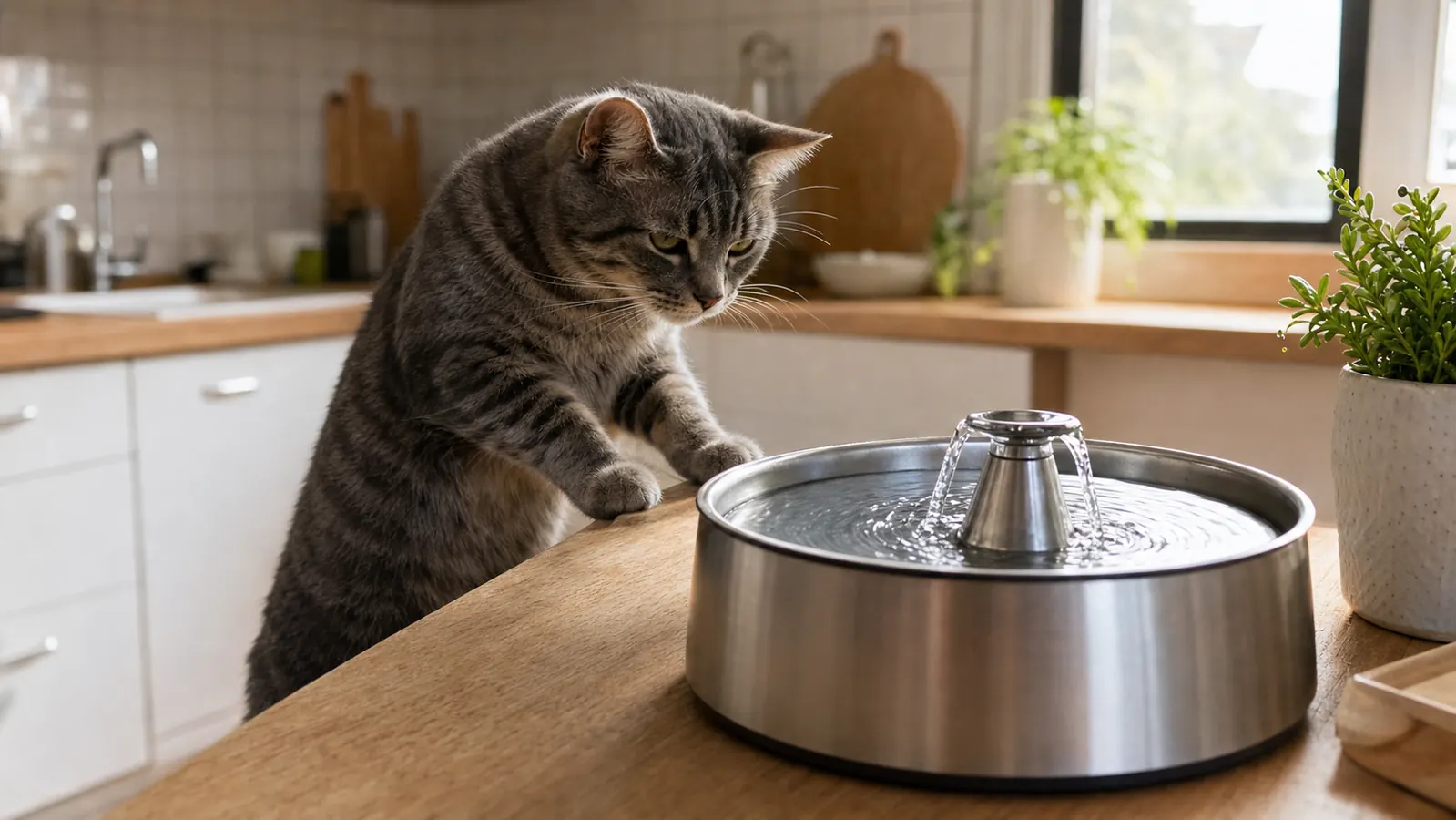
Let me start with the question I had before I bought the Veken stainless steel fountain: is it actually stainless, or is it plastic with a shiny shell? My older cat, Biscuit, had rejected three plastic fountains in a row. He would drink eagerly for a week, then sniff the water, walk away, and stare at me like I had personally wronged him. A friend at the dog park suggested the issue was plastic taste buildup. She said go stainless. I did not want to spend the money if the stainless was superficial, so I researched it more carefully than I probably should have for a cat water dish.
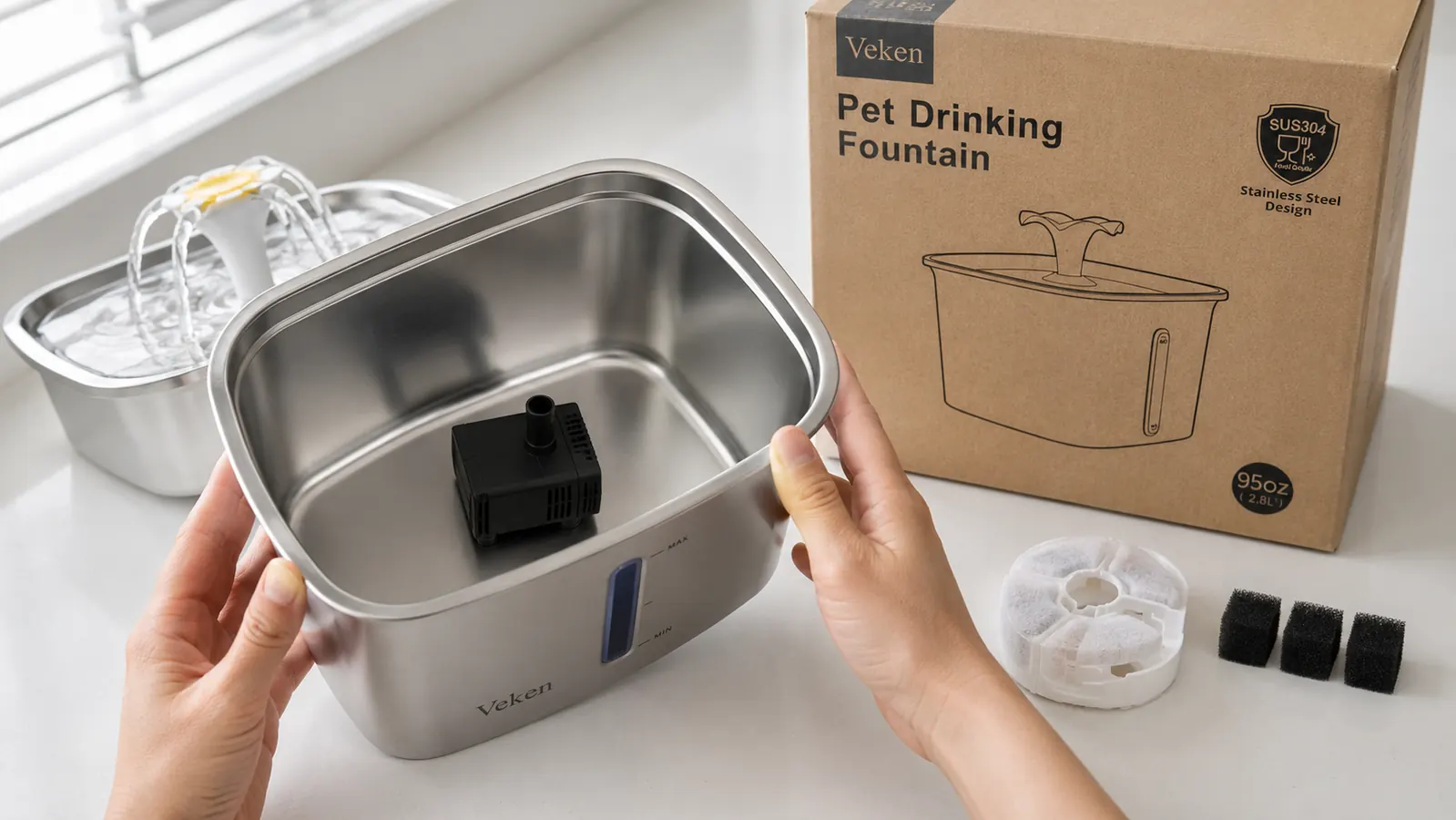
Short answer: the Veken is genuinely stainless where it counts. The outer shell is brushed stainless, and more importantly the inner basin where the water actually sits is also stainless steel. The dome on top that the water flows over is plastic, as is the inner pump housing. Those plastic parts do touch water, but they are above the main reservoir and the contact is partial. For a cat that has been rejecting plastic fountains, this construction makes a real practical difference. For a cat who has never cared either way, you may not notice the change.
The Quick Verdict
The stainless upgrade is genuinely worth it for plastic-averse pets, but go in knowing the filter economics and the biofilm risk nobody mentions on the listing.
Amazon Check Today's Price →If your cat or dog has been rejecting a plastic fountain, the stainless switch is probably the fix.
The Veken holds 108 oz, runs near-silently, and has 17,000+ verified Amazon ratings. Check the current price and see if it makes sense for your situation.
Amazon Check Today's Price on Amazon →What the Listing Photos Do Not Show You
The Amazon listing for the Veken shows the fountain clean, full, and gleaming under studio light. That version of the fountain exists for about a week. After that, reality sets in. The dome develops a thin water-mineral line at the base where flow meets the stainless rim. The inside of the basin collects fine sediment from tap water and, if you have a shedding cat or dog nearby, fur. None of this is unusual for any pet fountain. What matters is how easy it is to address.
Here is the part that surprised me: biofilm. A thin, slightly slippery film that forms on submerged surfaces when standing water sits long enough and organic material is present. Pet saliva, food particles from a pet who eats then drinks, and tap mineral content all feed it. The stainless surfaces resist it better than plastic because stainless is non-porous, but they do not eliminate it. If you go three weeks without a full clean, you will feel it on the inner basin when you run a finger along the bottom. It does not smell. It is not dramatic. But it is there, and cats and dogs, with their far more sensitive noses, certainly detect it before you do. That is why a fountain that seemed fine to you can still get the slow rejection from a finicky pet.
The fix is straightforward: full disassembly cleaning every ten to fourteen days rather than the box's suggestion of every two to four weeks. A drop of unscented dish soap, a rinse, and you are done. The stainless surfaces come clean easily. Factor that rhythm into your week before you buy, because if you are the kind of person who will skip it for a month when life gets busy, you will eventually get the rejection again.
The Honest Case for the Price Difference
The Veken stainless runs at roughly double the price of a comparable plastic fountain. That gap is real and worth examining before you commit. I tested a plastic Veken model side by side at a friend's house whose cats were indifferent to material, and functionally they behaved identically: same pump, same flow modes, same filter system. The stainless premium buys you three things.
First, the non-porous surface. Plastic develops micro-scratches from daily use that harbor bacteria and retain odor. Stainless does not. At the two-month mark, the stainless basin I was using had no detectable odor even before washing. A plastic basin I had used previously would develop a faint sourness by day four even when visually clean. Second, longevity. Stainless will not yellow, crack, or develop the surface degradation plastic shows after a year of UV exposure and repeated cleaning. Third, and most practically, if your specific pet has been demonstrating a plastic aversion, stainless resolves the underlying issue rather than papering over it.
If your pet is not fussy about material, the plastic version saves money and performs identically in terms of hydration mechanics. If you are dealing with a pet who keeps quitting plastic fountains after a few weeks, the stainless is the right call and will likely save you the cost of buying yet another replacement.
At the two-month mark the stainless basin had no detectable odor even before washing. A plastic basin I had used previously would develop a faint sourness by day four, even when visually clean.
The Filter Economics Nobody Runs the Numbers On
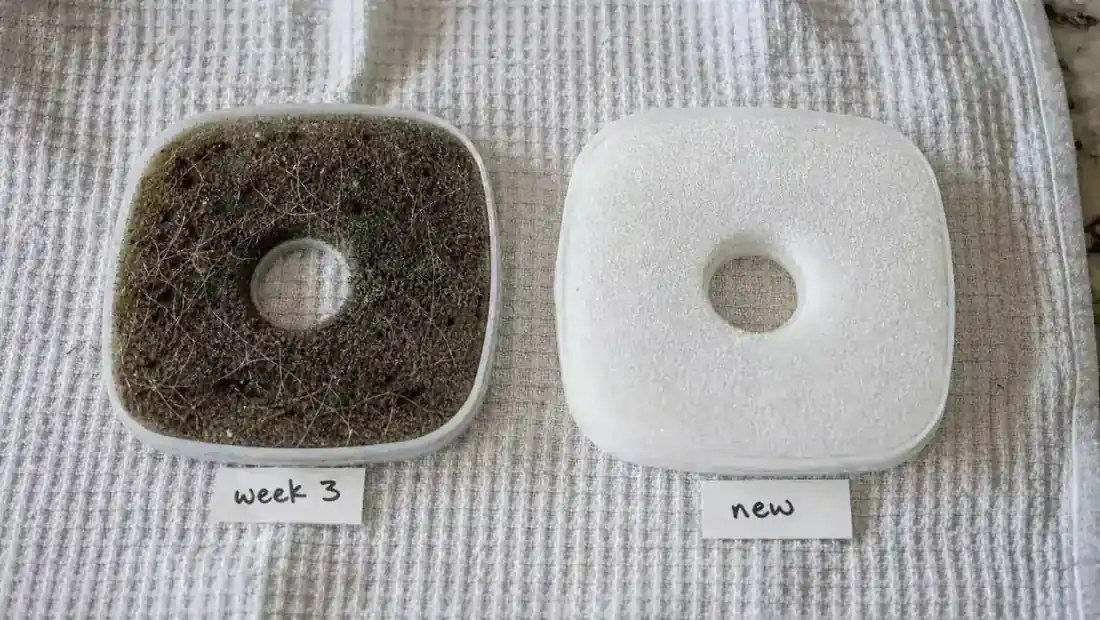
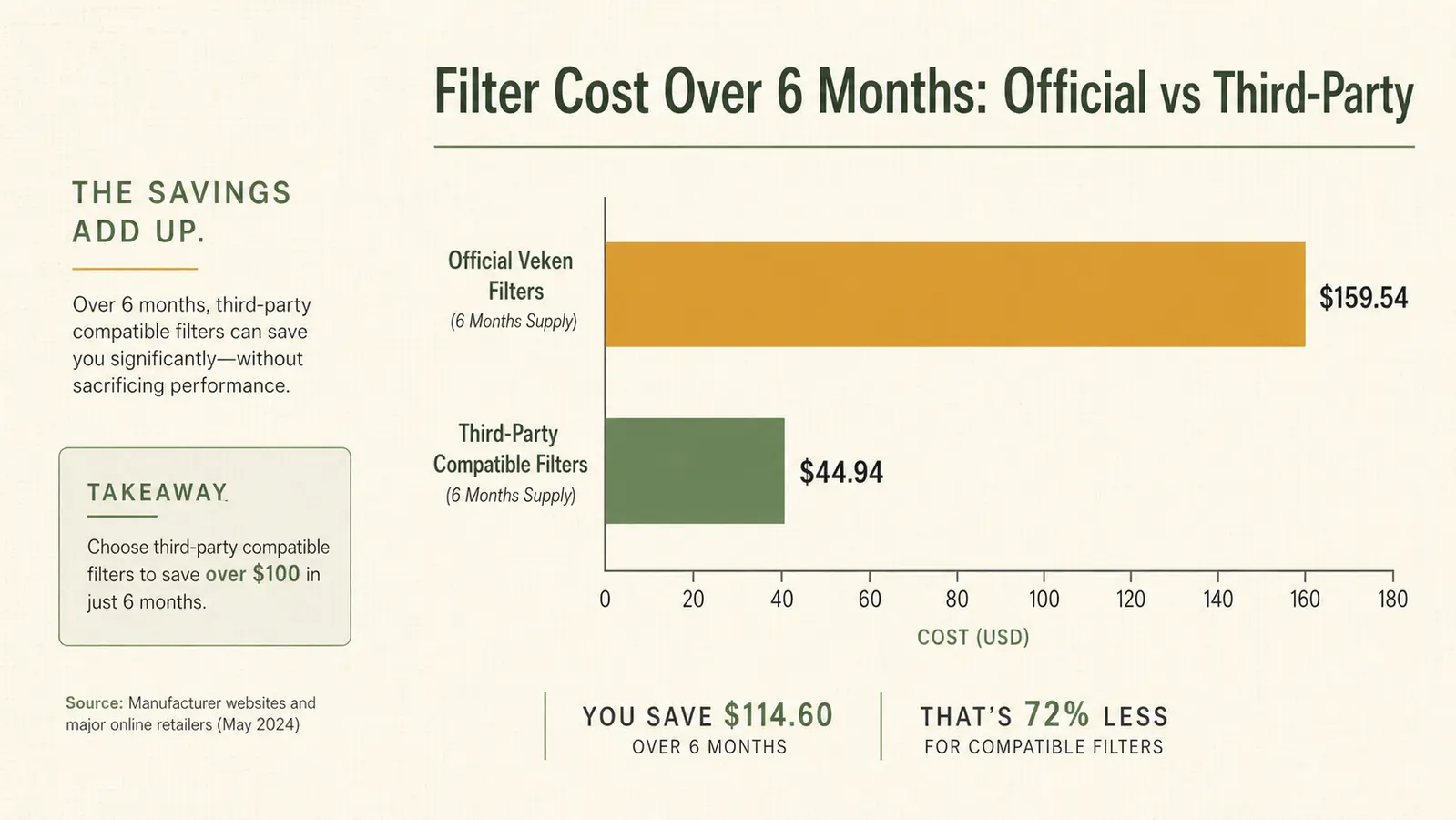
This is the section most reviews skip entirely, and it is the one that affects your actual long-term cost. The Veken uses a two-stage filter: a foam pre-filter that catches hair and debris, and a carbon filter that handles chlorine and odor. The official Veken replacement filters run around twelve to fourteen dollars for a four-pack, which works out to three to three fifty per filter. With one cat and compliant filter-change behavior, you might stretch each carbon filter to four to six weeks, landing around eight to twelve dollars a month in filter cost.
With two or more cats, or a dog that drinks enthusiastically and splashes, the pre-filter loads faster and the carbon filter picks up more organic load. In that scenario you are replacing the carbon filter every three to four weeks. Now you are at a meaningful monthly cost just in filters. Over a year that is a substantial amount on top of the fountain itself.
Third-party compatible filters exist on Amazon and typically run about half the price per filter. I have tested two brands. One performed comparably to the Veken original. One had a flow restriction issue that made the pump work harder and audibly louder after about a week. Do not go cheap on the third-party filter without checking recent reviews specifically for flow problems. If you find a third-party option with solid current ratings and no flow complaints, it can meaningfully cut the ongoing cost. The chart below shows roughly what you should expect to spend either way over six months.
Dogs and the Veken: What the Listing Undersells
The product is marketed primarily to cat owners, but I know several dog owners using it and tested it briefly with Mango, my neighbor's twelve-pound Havanese. The 108 oz capacity is the key selling point for dog use. Smaller dogs, anything under fifteen pounds, can go three to four days between refills. For dogs in the twenty to thirty pound range, plan on refilling every one to two days at active use.
Dogs drink more forcefully than cats and some will splash. The Veken does not have a wide spillage-catching base, so if your dog is an enthusiastic drinker, expect some floor moisture. A waterproof mat underneath is worth the three dollars it costs. Dogs also introduce more food-adjacent debris into the water if they eat and drink in close proximity. For dogs specifically, I would bump cleaning to weekly rather than biweekly, because the biofilm accumulation rate is faster with a dog's larger saliva volume.
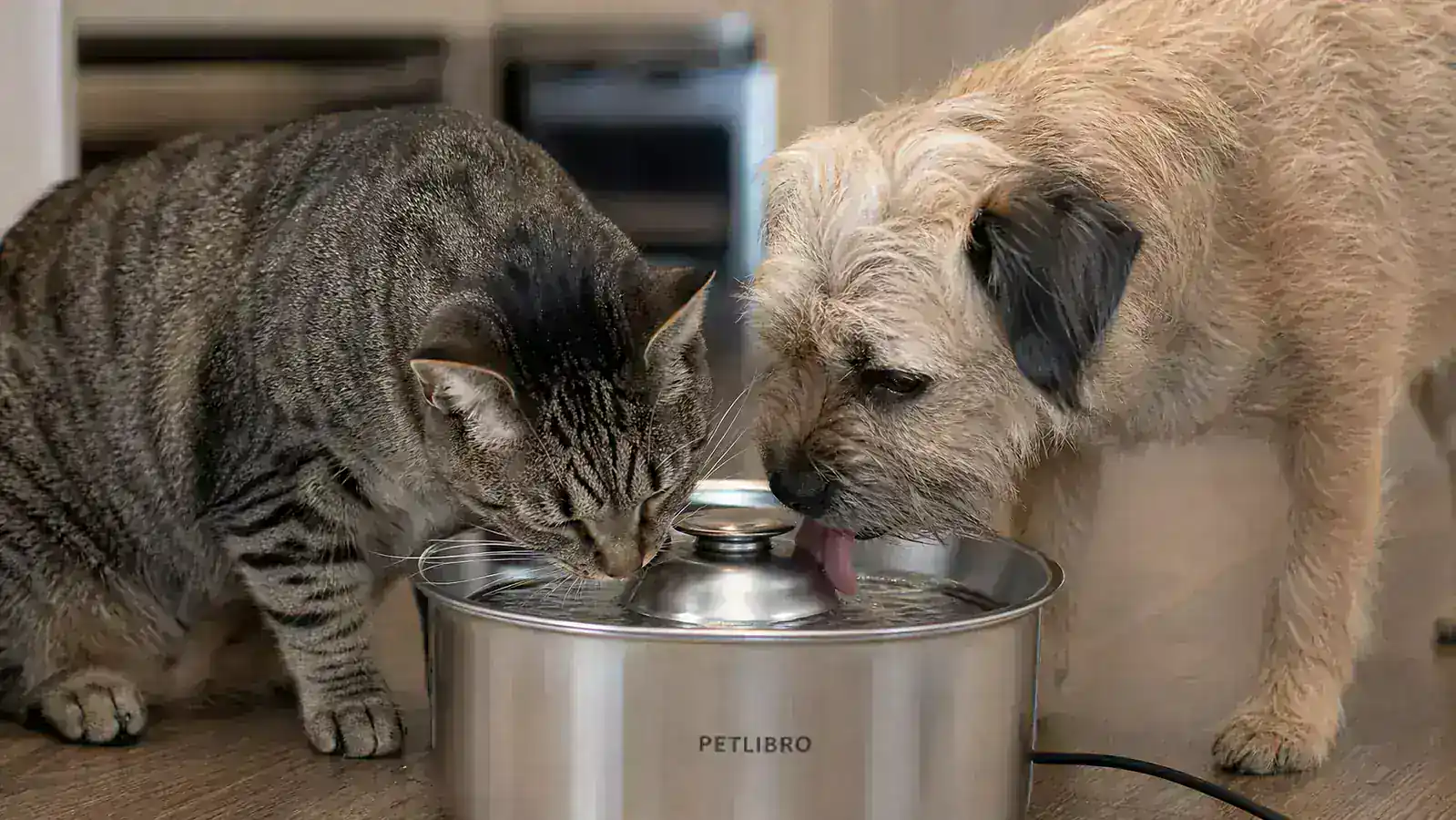
For a multi-pet household with one cat and one small dog sharing the fountain, the Veken handles it without issue. The capacity is sufficient, and both species can use the flowing dome simultaneously without conflict. If you are comparing options for a mixed household, the Veken is one of the few fountains at this price point built robustly enough to handle that kind of daily dual-species use.
The Pump Noise Nobody Warns You About
At normal water levels the Veken is genuinely quiet. Most reviews accurately note this. What those reviews do not tell you is what happens when the pump is starting to fail, which will occur at some point because all fountain pumps do eventually fail.
The warning sign is a rattling hum that gets slightly louder over a week or two. It is not a sudden loud failure; it creeps up. The cause is usually either hair wrapped around the impeller, which is fixable with a cleaning, or actual bearing wear, which means the pump needs replacing. Pull the pump, clear any debris from the impeller and intake, reassemble, and test. If the rattle persists after a thorough cleaning, the pump is worn. Veken sells replacement pumps, and they also show up from third-party sellers. Replacing the pump is a five-minute job. Having that repair option is genuinely useful because it means you are not discarding the whole fountain; you are just swapping an eight-dollar component.
A second noise situation happens specifically when the water level is low. As the reservoir approaches minimum fill, the pump draws air and produces a high-pitched whine. This is common to nearly all fountain designs and is a design feature, not a defect. It is your signal to refill. If you hear it, refill promptly, because running the pump dry accelerates wear. If you find yourself hearing it often, consider setting a weekly refill reminder regardless of whether it sounds like it needs it.
What the Negative Reviews Are Actually About
At 17,000 plus Amazon ratings the Veken has a substantial number of one and two-star reviews. I read through several dozen of them. The recurring themes break into two categories: actual product issues and maintenance failures.
Actual product issues include one complaint pattern I take seriously: discoloration in the water after initial setup. This is the carbon filter releasing fine activated carbon particles into the first fill, which the instructions warn about. It is harmless but alarming-looking if you do not know to expect it. The fix is to run the fountain for thirty minutes and discard the first fill before letting your pet use it. Multiple negative reviews are clearly about someone who skipped that step, got gray water, and returned the unit. That is a documentation problem as much as a product problem. The second actual-product complaint worth noting is cord length. The Veken's cord is approximately five feet. If your floor plan puts the fountain more than five feet from an outlet, you will need an extension cord. Not a dealbreaker, but worth checking before the fountain arrives.
The maintenance-failure reviews follow a predictable pattern: pet adopted the fountain readily, then gradually stopped using it over four to eight weeks. In almost every case the reviewer describes not having changed the filter yet or not having done a full cleaning since purchase. When cats or dogs stop using a fountain they were previously enjoying, the first thing to check is water quality, and water quality is entirely a maintenance story with this product. The fountain cannot maintain itself.
What I Liked
- Stainless inner basin resists biofilm and odor far better than plastic alternatives
- 108 oz capacity handles multi-cat households and small dogs without daily refilling
- Genuinely near-silent at normal water levels, three adjustable flow speeds
- Works well for both cats and dogs, including mixed-pet households
- Pump is replaceable separately, extending the fountain's useful life past a typical failure point
- Non-porous stainless surfaces clean quickly with minimal scrubbing
Where It Falls Short
- Biofilm accumulates faster than the box suggests, requiring cleaning every ten to fourteen days
- Ongoing filter cost of eight to eighteen dollars per month depending on household size and brand choice
- Five-foot cord limits placement flexibility in some room layouts
- First fill runs gray from the carbon filter if you do not discard it, which alarms new owners
- Splashing dogs will need a floor mat underneath; the base does not catch overflow
- Pump rattle is an early warning of impeller debris or wear that demands attention before it worsens
Who This Is For
Buy the Veken stainless if your cat or dog has cycled through plastic fountains and gradually rejected each one, if you have multiple pets sharing one water source and need real capacity, or if your vet has flagged kidney or urinary health concerns that make hydration a priority. It is a capable, well-built fountain that earns its price if you are consistent about maintenance. Owners who run a two-week clean-and-filter schedule will get excellent performance from it for years. If you want to understand more about why cats in particular benefit so much from flowing water sources, the piece on ten reasons cats need a pet water fountain covers the biology and the behavioral research in more detail.
Who Should Skip It
If your pet drinks happily from a bowl or an inexpensive plastic fountain and shows no signs of rejection or reduced intake, you do not need the stainless upgrade. If your lifestyle means you travel frequently and cannot guarantee someone will top up the reservoir every few days, a fountain creates more risk than a large capacity bowl. If you are resistant to an ongoing filter spend, factor the real monthly cost before committing. And if you have a large breed dog over forty pounds as the sole fountain user, consider a higher-capacity model; the 108 oz fills faster than you expect with a big dog drinking deeply. For that situation, my comparison article on fountain options versus ceramic bowls walks through the capacity math more specifically and can help you pick the right setup.
For a plastic-rejecting cat or a multi-pet household that needs real capacity, this is the fountain I would recommend.
The Veken stainless handles the two things most fountains fail at: it stays clean longer on stainless surfaces and it actually holds enough water for more than one pet. Check the current price on Amazon and read the Q and A section if you have questions about compatibility with your setup.
Amazon Check Today's Price on Amazon →