
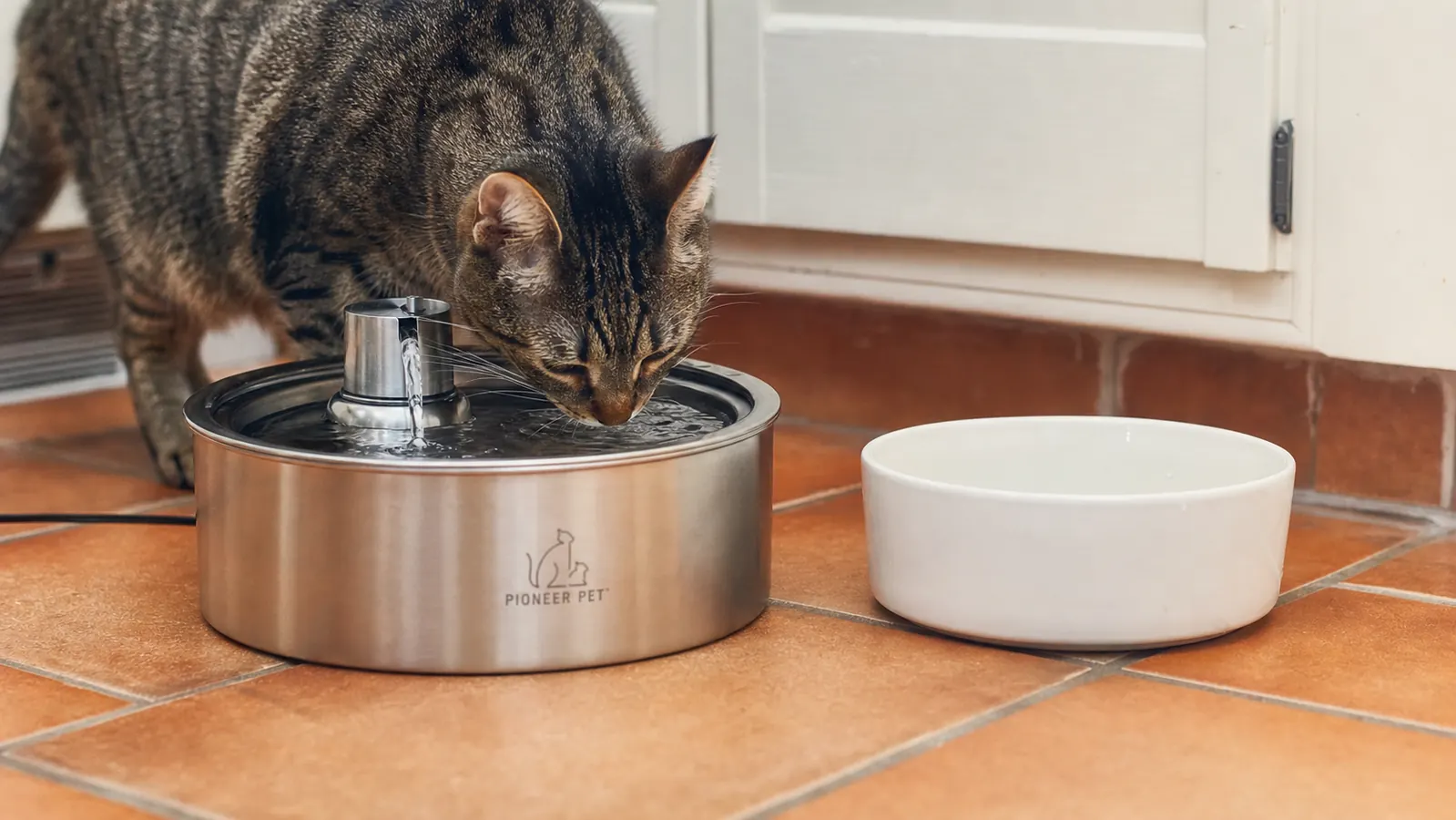
My cat Marigold drank so little water that her vet flagged it at two consecutive annual exams. Same clean bowl, same filtered tap water, same spot on the floor she had always used. She would walk past it and ignore it the way you ignore a jar of pennies. Then I switched to a running fountain and within 48 hours she was drinking noticeably more, multiple times a day. That was not a coincidence, and it turns out there is solid biology behind it.
If you are weighing a pet water fountain against a ceramic bowl, this article is the honest comparison I wish I had found earlier. I am going to cover how each option performs on hydration, hygiene, noise, maintenance, and cost so you can make a real decision instead of guessing.
| Veken Stainless Fountain | Ceramic Water Bowl | |
|---|---|---|
| Capacity | 108 oz / 3.2 liters | Typically 16–32 oz |
| Water movement | Continuously circulating pump | Completely still |
| Filtration | Included carbon + foam filters | None |
| Material | Food-grade 304 stainless steel | Glazed ceramic (varies by brand) |
| Bacterial biofilm risk | Low, pump keeps water moving, stainless resists film | High, still water + porous glaze interior |
| Refill frequency | Every 3–5 days depending on pets | Daily, sometimes twice daily |
| Noise level | Near-silent when water level is full | Silent, no motor |
| Upfront cost | Check today's price on Amazon | Budget to mid-range depending on quality |
| Ongoing cost | Replacement filters needed monthly, budget-friendly per unit | None beyond water and cleaning supplies |
Where the Veken Fountain Wins
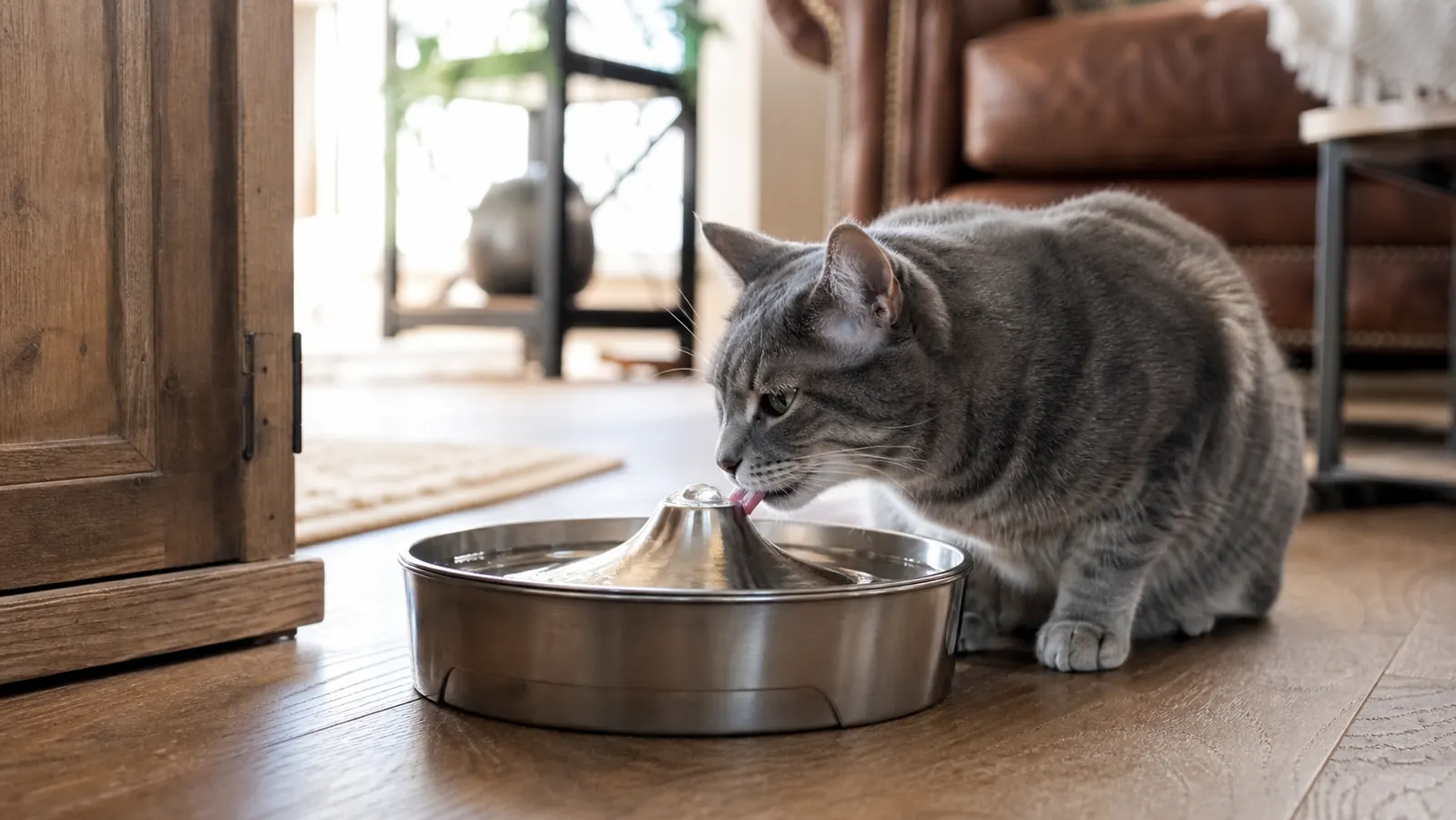
The single biggest advantage of a running fountain is that cats are instinctively drawn to moving water. In the wild, still water is often stagnant and unsafe. Moving water signals fresh. That instinct does not go away just because your cat lives indoors and gets premium kibble. When Marigold started drinking three times a day instead of once, she was following millions of years of hardwiring, not doing me a favor.
The Veken's 108-ounce capacity is a real practical win for multi-pet households or anyone who travels for work. I have two cats now, and I can leave for a long weekend without arranging a pet sitter just to top up the water. The stainless steel construction also matters more than it sounds. Plastic fountains develop micro-scratches that harbor bacteria and can cause feline chin acne. Ceramic cracks or chips over time. Stainless stays inert, does not absorb odors, and does not react with saliva. The 4.4 rating from over 17,000 reviewers lines up with what I experience: it is a fundamentally solid, no-drama product.
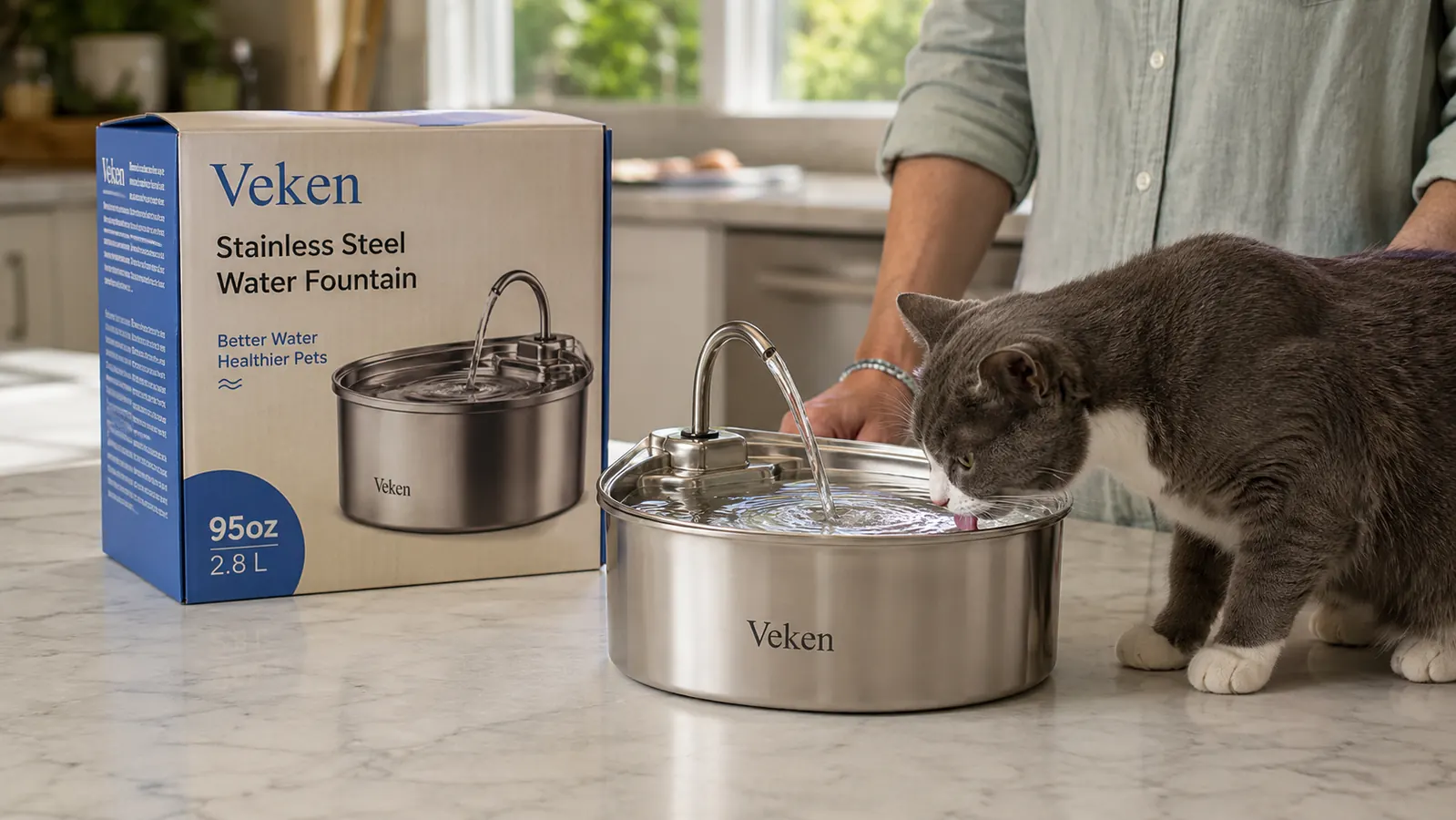
The built-in carbon and foam filters deserve a mention too. The carbon layer catches chlorine, odors, and heavy metals. The foam layer catches hair and debris before they reach the pump. That combination means the water your pet is drinking is genuinely cleaner than what sits open in a ceramic bowl after a day on the floor, especially if you have dusty floors, other pets, or a kitchen that sees real cooking.
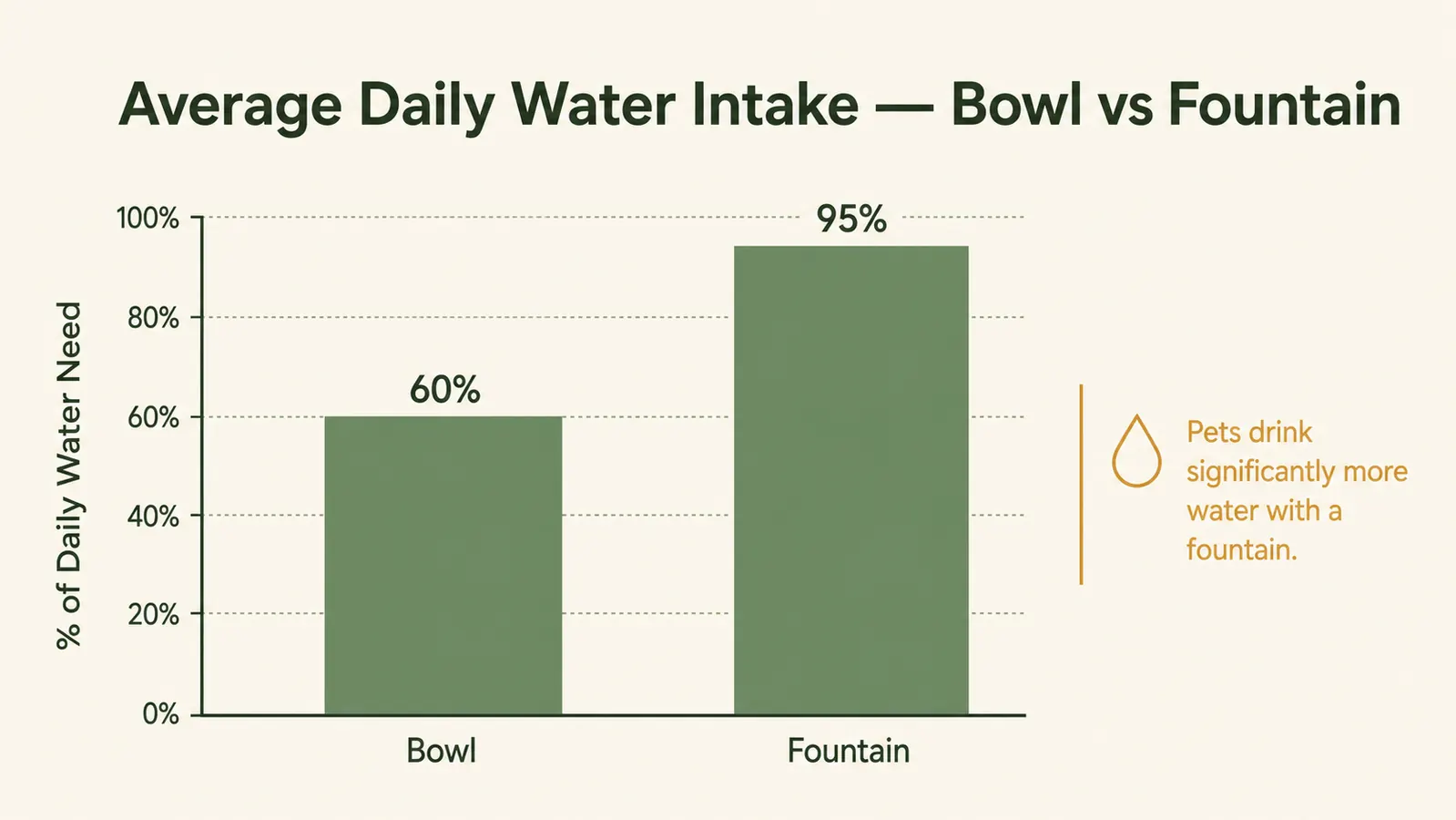
Your cat is probably drinking less water than they need. This is the simplest fix.
The Veken Stainless Steel Pet Fountain holds 108 oz, runs quietly, includes filters, and takes about ten minutes to set up. More than 17,000 pet owners have rated it 4.4 stars. Check today's price on Amazon.
Amazon Check Today's Price on Amazon →Where the Ceramic Bowl Wins
I want to be fair here, because the ceramic bowl is not wrong for everyone. The upfront cost is meaningfully lower. A good ceramic bowl runs in the budget range and will never need a filter replacement or a motor cleaning. If you have a dog who drinks readily from any source, rain puddles included, you are not going to see a hydration improvement from a fountain. The bowl works fine. Dogs are much less discriminating about still versus moving water than cats are.
There is also no noise risk with a ceramic bowl, zero. Some cats are bothered by motor hum, and some owners are sensitive to it in a quiet bedroom at night. The Veken is genuinely quiet when the water level is properly maintained, but if you let it run low the pump will gurgle. A ceramic bowl has no such failure mode. And for very small spaces like a studio apartment, fewer appliances can feel like a real quality-of-life improvement.
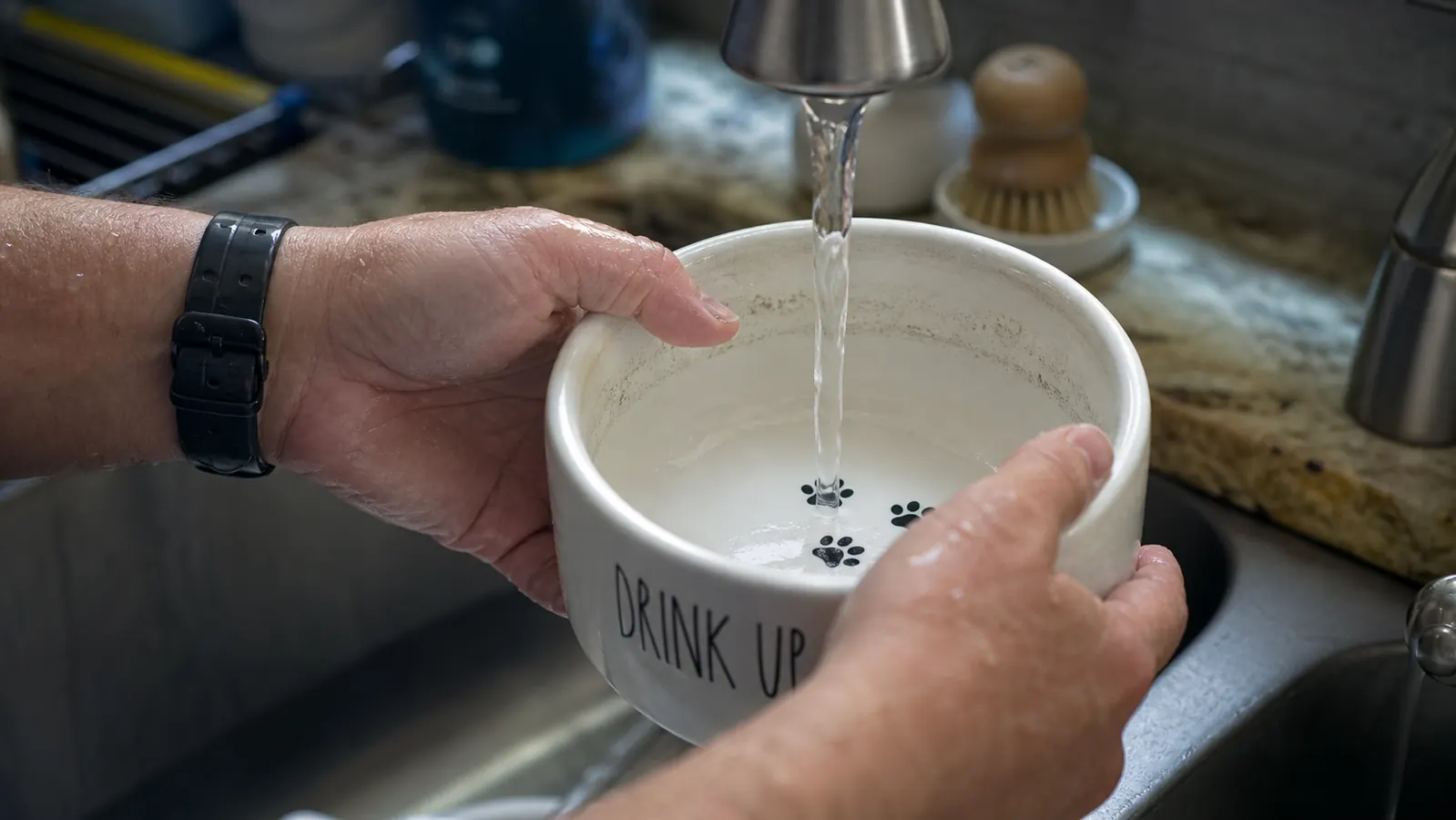
Still water is not just less appealing to cats. It is also measurably less clean. A ceramic bowl left for 24 hours in a typical kitchen develops bacterial counts that a moving, filtered fountain simply does not.
The Hygiene Difference Nobody Talks About Enough
Here is the thing that shifted my thinking before I bought my first fountain. A ceramic or stainless bowl sitting still collects airborne particles, pet hair, and residue from your cat's saliva throughout the day. After about 24 hours at room temperature, that water develops a measurable bacterial biofilm on the bowl surface. You can sometimes see it as a faint slippery coating when you run your finger around the inside of the bowl at the end of the day.
A fountain's continuously circulating water disrupts that biofilm cycle. The pump keeps water moving so it does not stagnate. The filter removes chlorine and organic debris. The stainless steel surface on the Veken is non-porous, so bacteria cannot anchor into micro-cracks the way they do on plastic or low-quality ceramic glazes. You still need to clean the fountain, rinse the bowls weekly and do a full pump-and-filter clean monthly, but the between-cleaning hygiene profile is genuinely better than a bowl you change once a day.
Maintenance Reality Check
Fountain skeptics always bring up maintenance, and they are not wrong to. A fountain has more parts than a bowl. The Veken has a pump, an impeller, a carbon filter, a foam filter, and the stainless basin itself. When I first set it up I read the instructions twice and still took about 20 minutes. Now a full cleaning takes me ten minutes every two to three weeks. I run the pump pieces under warm water, drop in a new carbon filter, wipe the basin, reassemble. That is genuinely less time than washing a bowl every single day, which is what you should be doing with a ceramic bowl if you care about hygiene.
The ongoing filter cost is real and worth factoring in. Replacement filters for the Veken run in the low range each, and I go through about one per month for two cats. That is a modest annual amount added to the upfront cost. Over a two-year period, a fountain ends up costing moderately more total versus a smaller amount for a high-quality ceramic bowl and cleaning supplies. For most people that math is easy to justify given the hydration and hygiene upside, but it is a real cost and I am not going to pretend otherwise.
Who Should Buy Which
Get the Veken fountain if: your cat is a reluctant drinker, your vet has mentioned kidney health or hydration in any conversation, you have more than one cat, or you travel occasionally and want one less thing to worry about. Also get it if your current bowl requires daily cleaning because your cat refuses day-old water. That particular headache disappears completely.
Stick with a ceramic bowl if: your pet is a dog who drinks enthusiastically from anything, you are genuinely on a very tight budget, you have an elderly pet who is already set in their habits and resists change, or you live in a space where any electrical appliance feels like too much. If your pet is healthy, young, and drinks adequately from a bowl today, there is no emergency here. The fountain is an upgrade, not a necessity for every household.
Where I land after using both: the ceramic bowl is fine, the fountain is better, and for cats specifically the difference is more than marginal. Cats with better hydration habits have meaningfully lower rates of urinary tract disease and kidney stress, two of the most expensive and heartbreaking conditions in middle-aged and senior cats. An affordable fountain that runs for years is an easy call when I think about it that way.
If your cat ignores the water bowl, a running fountain is the most likely fix.
The Veken Stainless Steel Pet Fountain has 17,000+ five-star reviews, includes filters, and comes in at a price that makes it easy to try without overthinking it. See current pricing on Amazon before you decide.
Amazon Check Today's Price on Amazon →