
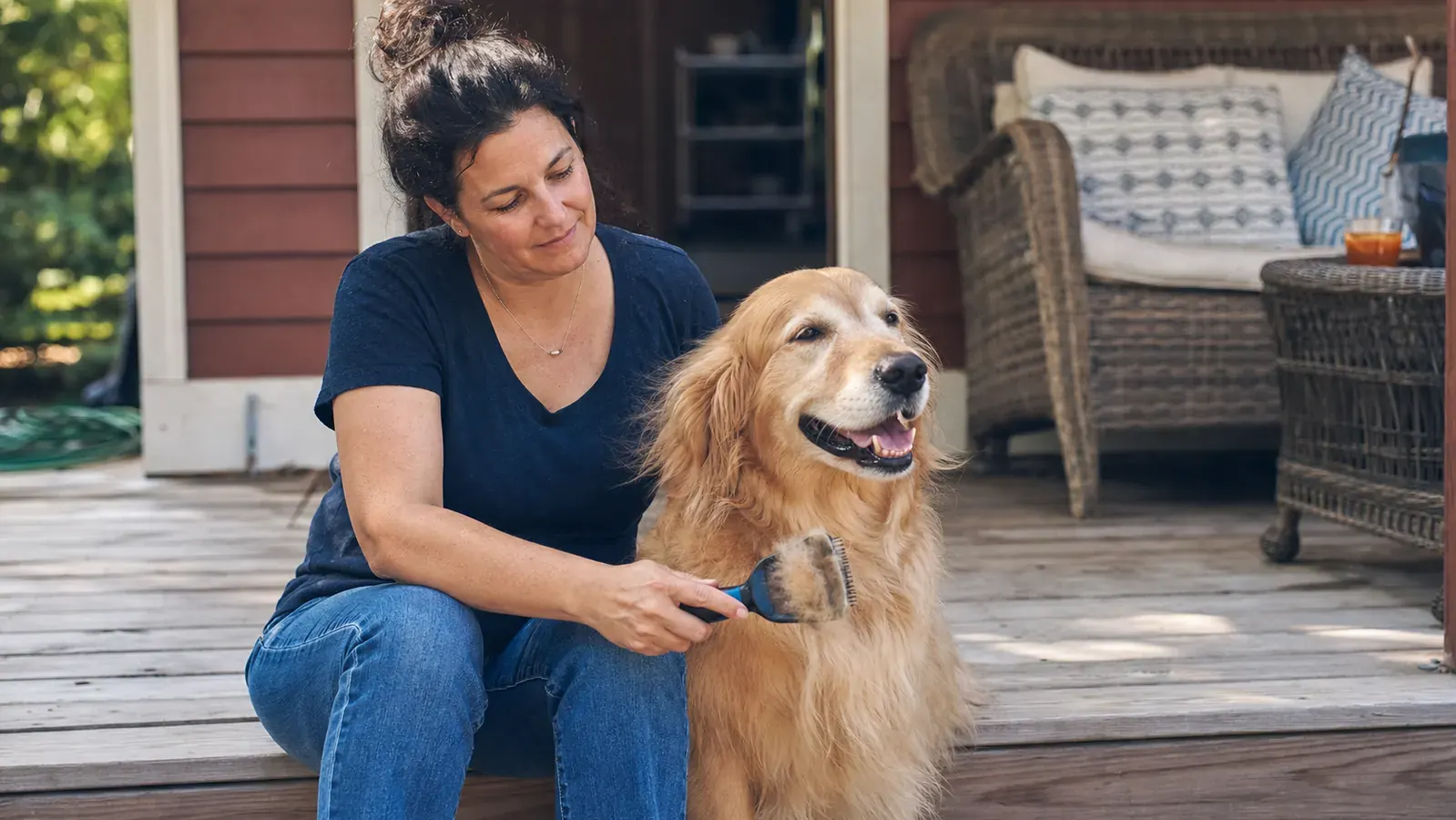
I have two dogs and one cat. For a while I thought pet hair was just a permanent state of my house, on the couch, in my coffee, somehow inside the refrigerator. I vacuumed four times a week and still handed visitors a lint roller at the door. Then I started actually treating shedding as something I could manage, instead of just cleaning up after. It took five changes to get from daily vacuum sessions to once or twice a week. None of them were expensive. None required a groomer. The biggest one was budget-priced on Amazon.
This guide covers the five steps that made the biggest difference. They work for dogs and cats. I've used every one of them, and I'll tell you what to expect, what the learning curve looks like, and what to skip. The Pat Your Pet Deshedding Brush shows up in Step 1 because it's the foundation. Everything else builds on top of it.
Your vacuum canister is full again, here's the brush that changes that
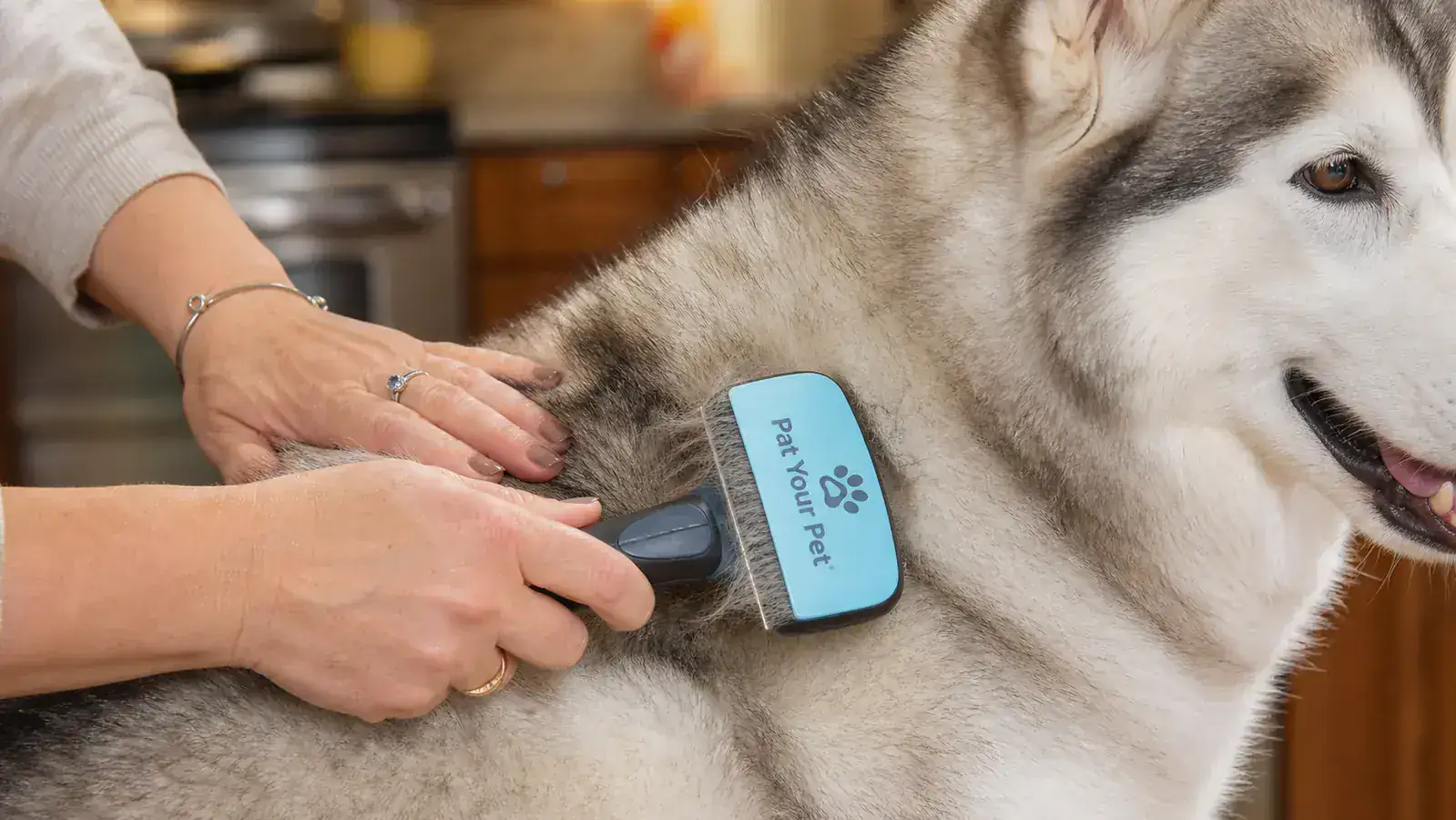
The Pat Your Pet Deshedding Brush has a double-sided design, a fine-toothed deshedding side for undercoat removal and a softer pin side for everyday detangling. Over 42,000 Amazon reviews, 4.6 stars, and works on both dogs and cats regardless of coat length. Budget-friendly.
Amazon Check Today's Price on Amazon →Step 1: Switch to a Real Deshedding Brush and Use It Consistently
Most people own a slicker brush. Slicker brushes are fine for surface detangling. They do almost nothing for the undercoat, which is where most of your loose fur originates. The undercoat is the soft, dense layer underneath the guard hairs, and in double-coated breeds like Huskies, German Shepherds, Corgis, Maine Coons, and Ragdolls, it blows out seasonally in a way that will make you question your choices.
A deshedding brush has fine, closely spaced teeth that reach past the outer coat and pull loose undercoat hair out before it falls on your floor. The Pat Your Pet brush has this on one side, and a wider-set pin brush on the other for detangling and finishing. I brush my dogs with the deshedding side first, then flip and finish. My cat tolerates the pin side better than any narrow-tooth comb I've tried.
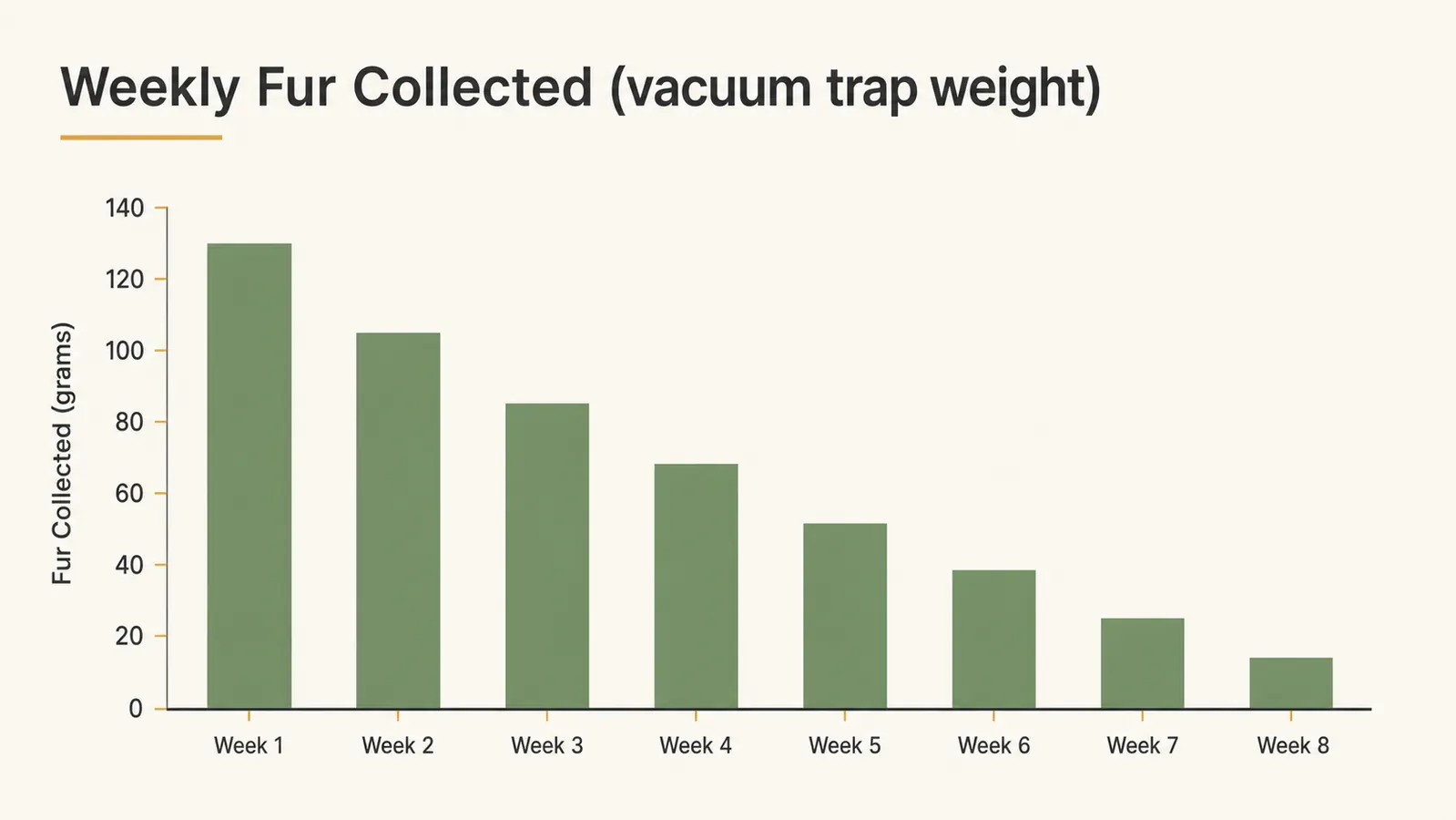
Consistency matters more than intensity. A ten-minute session every two to three days beats a thirty-minute marathon once a week. The steady cadence keeps loose fur from reaching the floor. When I first started using a proper deshedding brush on my German Shepherd mix, Theo, the first three sessions each filled a grocery bag. By week three the volume had dropped by more than half. Your results will vary by breed, but expect a big reduction within two to three weeks if you stick with it.
Step 2: Feed a Diet With Enough Omega-3 Fatty Acids
Coat health starts from the inside. A dry, brittle coat sheds more because the individual hairs break off instead of completing a normal growth cycle. The most common dietary gap I see in shedding complaints is omega-3 fatty acids, specifically EPA and DHA, which come from fish oil. Most commercial kibble contains omega-6 fatty acids in abundance but is lighter on omega-3.
You don't need to overhaul your pet's entire diet. Adding a fish oil supplement is usually enough. For dogs, look for a softgel or liquid formula with clear EPA and DHA milligram counts on the label. For cats, sardine oil or salmon oil in small amounts works well. Talk to your vet about dosing, it scales with body weight and there is such a thing as too much. My vet suggested 1,000mg combined EPA/DHA daily for Theo at 65 pounds. Within six weeks his coat looked shinier and his seasonal blowout was noticeably shorter.
One thing to watch: don't expect changes in the first week or two. Coat improvements from dietary changes take four to eight weeks to show up. If you start fish oil at the same time as a new deshedding brush routine, you won't be able to tell which one helped more. Start the brush routine first, then add omega-3 a few weeks later if you want to track the difference.
Step 3: Keep Them Hydrated, Especially Cats
Dehydration is an underrated driver of excessive shedding, and it's especially easy to miss in cats. Cats evolved as desert predators who got most of their water from prey. They have a naturally low thirst drive, which means a cat eating dry kibble exclusively is almost always mildly dehydrated. Mild dehydration stresses the skin and coat, leading to more shedding and dull fur.
For dogs, adequate water intake is usually less of an issue, but it still matters during hot weather or after hard exercise. Keep the bowl clean and full. Dogs will skip a bowl that smells like old standing water. For cats, switching from a static bowl to a circulating fountain dramatically increases water intake for most cats because moving water triggers the prey instinct and also stays fresher. Our other guide on getting cats to drink more water covers that in depth, but the short version is: even a modest increase in daily water intake shows up in coat quality within a few weeks.
Step 4: Bathe on a Schedule, Not Just When They Smell
Bathing loosens the dead hair that a brush can't reach, especially in the undercoat. The problem is most people only bathe their dog when they notice an odor, which usually means waiting six to eight weeks between baths. A shorter schedule, every three to four weeks for most double-coated dogs, removes dead fur before it has a chance to distribute itself across your furniture.
The technique matters. Lather the coat thoroughly with a deshedding or moisturizing shampoo, let it sit for two to three minutes, then rinse completely. Incomplete rinsing leaves residue that irritates the skin and makes the coat look dull and shed more. After towel drying, use the deshedding brush while the coat is still slightly damp. Loose fur comes out in higher volume when the coat is warm and the cuticle is open. I do this with Theo in the backyard because the fur clouds are considerable.
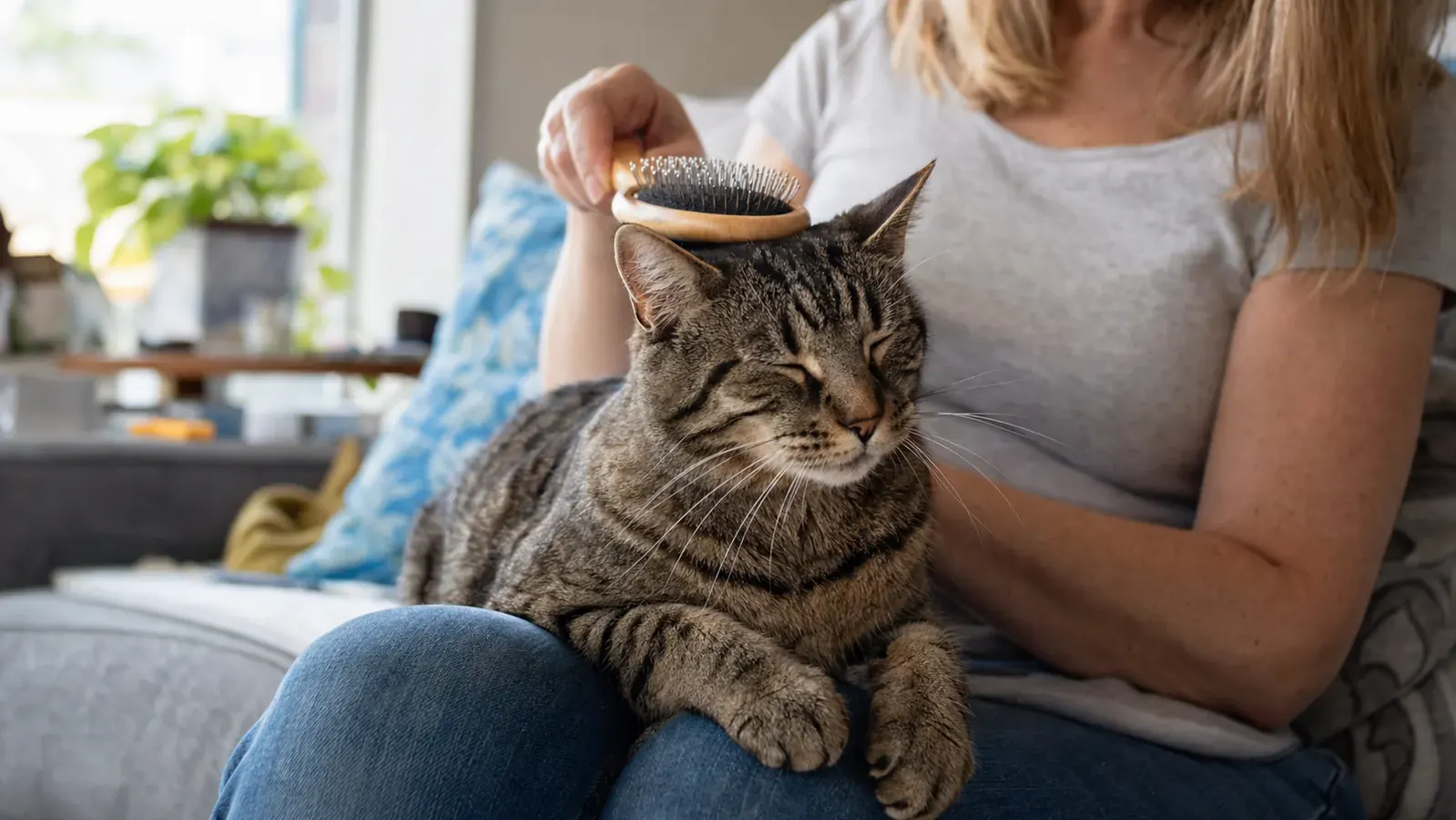
For cats, most don't need regular bathing unless they have a skin condition or have gotten into something. A weekly brushing session with the pin side of the Pat Your Pet brush is usually sufficient for indoor cats, and much less stressful for everyone. Long-haired cats like Persians and Maine Coons may benefit from a monthly bath, but get a cat-specific shampoo and go slowly if you're introducing it.
The first three brushing sessions with Theo filled a grocery bag each time. By week three the volume had dropped by more than half. Consistency does more than any single session ever will.
Step 5: Manage the Environment, Reduce What Lands and Lingers
Even with a great brushing routine and optimal diet, some hair is going to fall. The goal of this step is making sure that hair doesn't embed itself into fabrics or recirculate through your HVAC system back onto clean surfaces. A few practical changes make a noticeable difference.
First, invest in washable furniture covers or tight-weave throws for your pet's favorite spots. Pet hair bonds with loose-weave fabrics and is very difficult to remove once embedded. A tight microfiber throw over the couch cushion can be thrown in the wash weekly. Second, swap your HVAC filter to a MERV-11 or higher rating if you have a forced-air system. Standard filters let pet hair and dander recirculate. A higher-rated filter catches more of it. Change it monthly during heavy shedding seasons. Third, vacuum with a pet-specific head that uses rubber bristles instead of brush-roll bristles. Hair wraps around brush rolls, clogs the vacuum, and sends fine dander back into the air. Rubber fins grip the hair and pull it into the canister instead.
None of this is a substitute for the first four steps. Environmental management is about not undoing your progress. If you're brushing consistently, feeding well, and keeping your pet hydrated, what reaches your furniture is a fraction of what it used to be. The covers and filter upgrades just keep that smaller amount from becoming a problem again.
What Else Helps
A few things I've tried that have a smaller but real effect. A humidifier in the main living area, particularly in winter when forced-air heat dries out the indoor air, noticeably reduced the static cling that sends loose fur flying onto every fabric surface. My cat in particular had much better coat condition through the dry months once I added a small cool-mist humidifier near her sleeping spot. Stress also contributes to shedding in both cats and dogs, animals experiencing chronic anxiety shed more. If your pet is high-strung, addressing the root cause (exercise, enrichment, or in some cases a calming supplement) will help the coat as a side effect. It won't solve a shedding problem on its own, but it's worth noting if you've done everything else and still feel like the shedding is excessive for the breed.
Also worth reading: the full review of the Pat Your Pet brush over three months of daily use on a Husky covers the durability questions, how the teeth hold up, and whether the double-sided design is worth it over a single-purpose tool. And if you're newer to deshedding brushes generally, the overview of why every dog and cat owner needs one covers the basics of coat types and which brush style suits which breed.
Start with the right brush, everything else builds on it
The Pat Your Pet Deshedding Brush handles both dogs and cats, short coats and long coats, with a double-sided design that covers daily brushing and heavy deshedding in a single tool. 4.6 stars across more than 42,000 reviews. Check today's price on Amazon before the next vacuum session.
Amazon Check Today's Price on Amazon →