
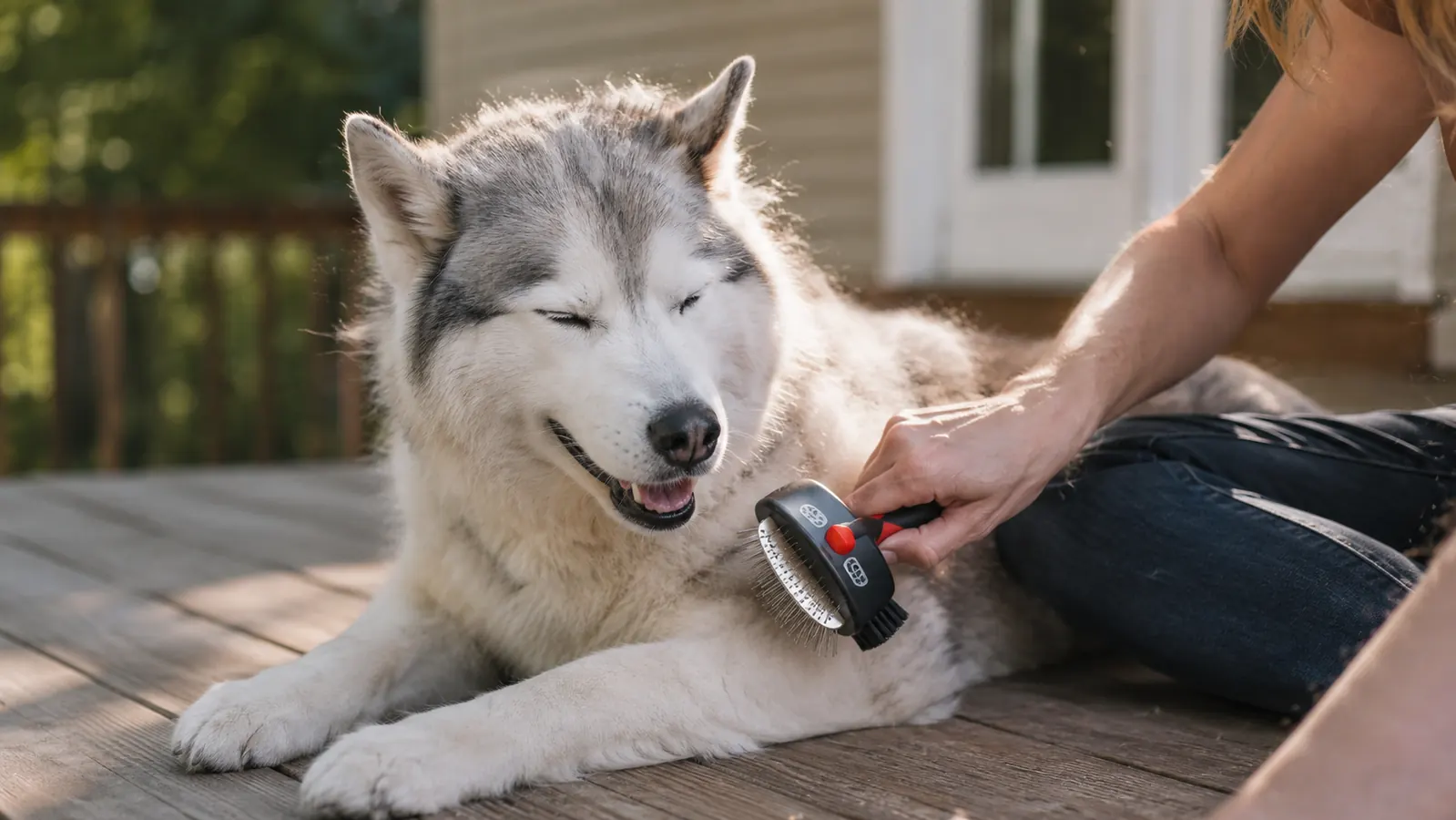
Koda is a 62-pound Siberian Husky who has exactly two settings: shedding a little, and shedding aggressively. He is four years old and I have had him since he was 12 weeks. In that time I have vacuumed furniture more times than I can count, replaced two slicker brushes that bent and clogged after a few months each, and spent a weekend deep-cleaning the house before every family visit. I was not looking for a miracle. I was just looking for a brush that would not fall apart and would actually pull loose undercoat instead of skating across the top of his coat.
I picked up the Pat Your Pet Deshedding Brush in early March. By the end of May, it had earned a permanent spot on the shelf next to Koda's leash. This review covers exactly what I found over those three months, twice-weekly sessions, including the honest parts.
The Quick Verdict
A genuinely well-built double-sided deshedding tool that removes real undercoat on large double-coated dogs, with a comfortable handle and a price that makes the FURminator hard to justify. The one thing holding it back: the pin side snags mats rather than separating them.
Amazon Check Today's Price →Still vacuuming twice a day? The right brush is cheaper than another vacuum bag.
The Pat Your Pet brush is currently one of the most reviewed deshedding tools on Amazon, with 42,000+ ratings at a price well below the competition. Worth checking today's price before you grab anything else.
Amazon Check Today's Price on Amazon →How I Have Been Using It
My routine with Koda is straightforward. Tuesday evenings and Saturday mornings, about 15 to 20 minutes each session. I brush outdoors when weather allows because the loose fur cloud is real and not something you want inside. I start with the bristle side (the softer face) to loosen the top coat and let Koda settle into being touched. Then I switch to the pin side for undercoat work, going in the direction of his coat on his back and flanks, and then carefully in short strokes around his chest and neck where the coat is thicker.
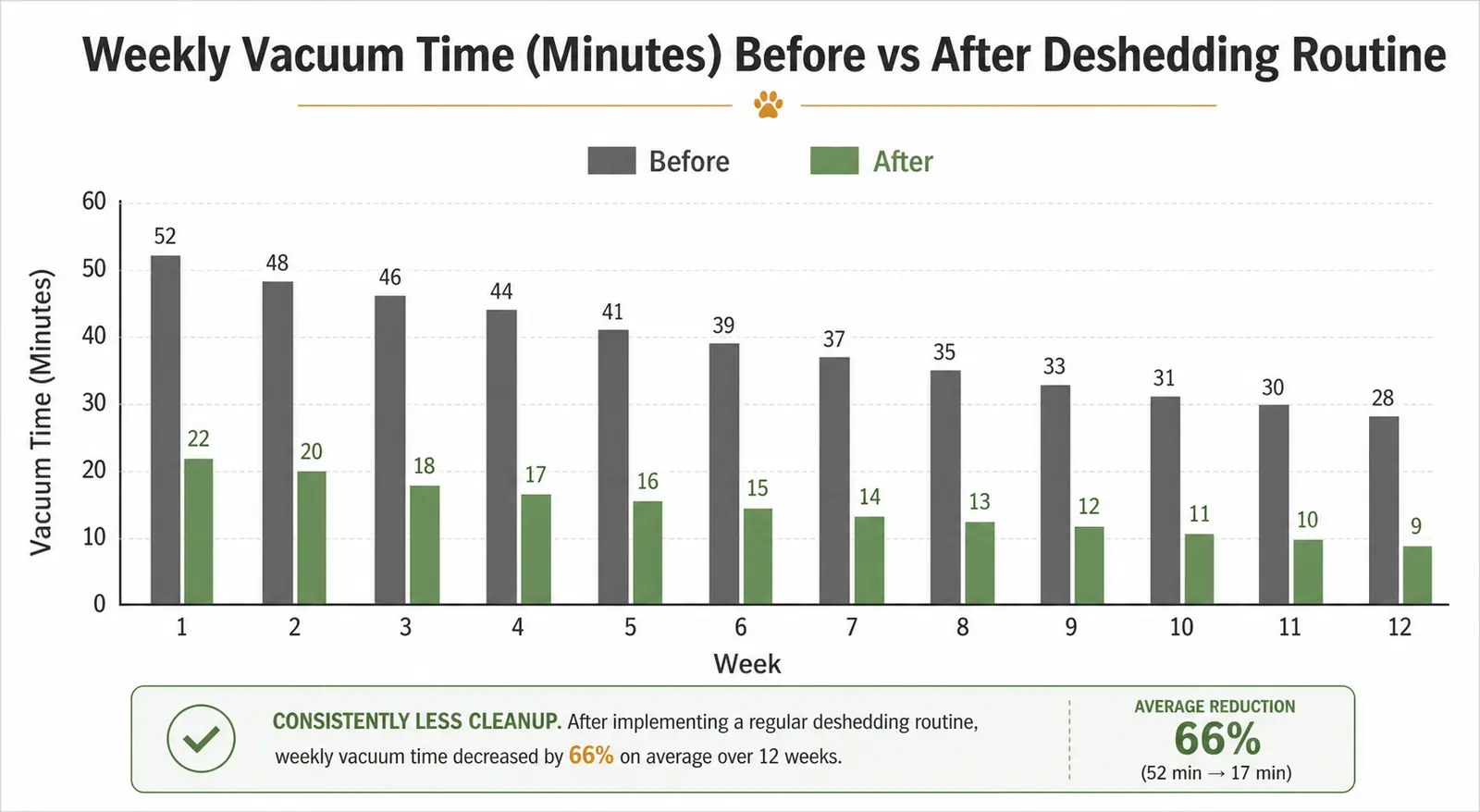
Before I started using this brush I was vacuuming the main living areas daily, sometimes twice a day after long grooming weekends when Koda blew coat. By week four with the Pat Your Pet brush on a consistent schedule, I had dropped to vacuuming every other day. By week eight, three times a week was enough. That shift is not magic. It is just what happens when you pull the loose undercoat before it lands on your floor and couch.
I also used this brush on my neighbor's longhaired cat, Birdie, twice during the same period. I will mention those observations in the section on versatility.
The Double-Sided Design: What Each Side Actually Does
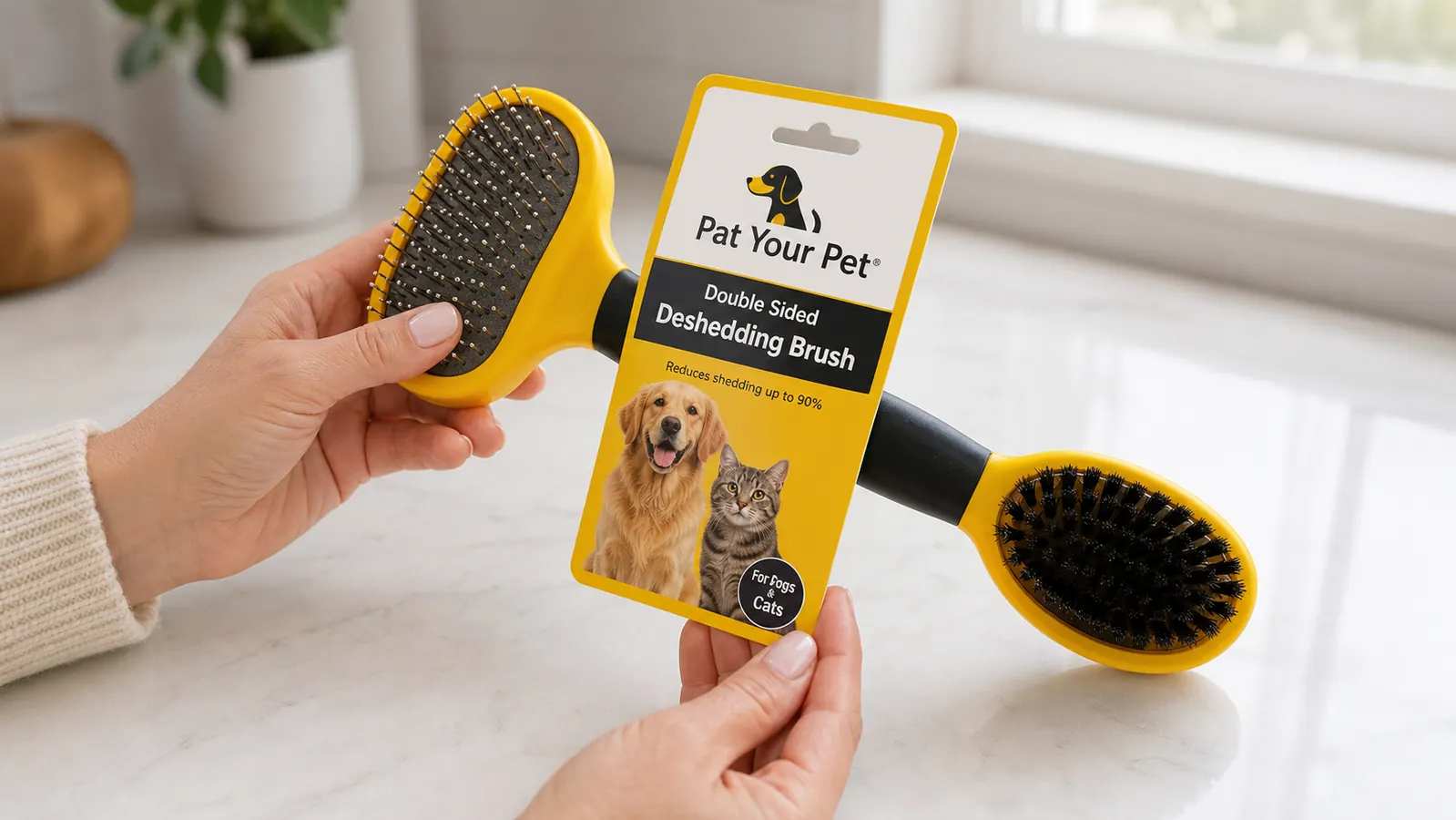
The brush has stainless-steel rounded pins on one face and densely packed nylon bristles on the other. Both sides share the same oval head and contoured handle. The pin side is what does the real deshedding work. The pins are long enough to reach through Koda's outer coat and grab loose undercoat without poking him. Over three months I have not found a bent pin, which is a big deal after watching my previous slicker brushes develop loose pins by month two.
The bristle side is more of a finishing tool. It smooths and distributes coat oils after you have done the undercoat work. I honestly use it as a warm-up pass to desensitize Koda before I switch to the pins. It does not remove loose fur the way the pin side does, but that is not what bristles are for. Think of it as the equivalent of a light comb-out before a real brush.
The handle is where this brush earns some real points. It is shaped so you can grip it from either the top or the side without your wrist getting awkward. I groom Koda on a rubber mat on the back patio and I am usually crouching or sitting on a low stool. A poorly shaped handle translates directly into wrist fatigue by the ten-minute mark. With this one I have not had that problem.
Shedding Results Over Three Months
Month one was about establishing a baseline and getting Koda used to the brush. He was wary of the pin side at first. I spent the first three sessions using only the bristle side and doing short sessions so he would associate the brush with calm handling rather than discomfort. By session four he was tolerating the pins, and by session six he was actively leaning into them on his shoulder blades.
By the end of month one I could collect a palm-sized fur bundle per session. By the end of month two, with undercoat clearing out on a consistent schedule, the per-session yield had dropped to about half that size because there was simply less loose fur waiting. That is the counterintuitive thing about a good deshedding routine: the brush seems to stop working as dramatically, but that is because it is doing its job. The fur ends up in the brush instead of on your couch.
In month three I tested skipping a full week to see what accumulated. The following session pulled a noticeably larger bundle, confirming the routine is what drives the result, not anything special about the brush on a given day. Consistent twice-weekly brushing with this tool reduced Koda's ambient shedding around the house by what I would estimate at 60 to 70 percent compared to my old slicker brush routine.
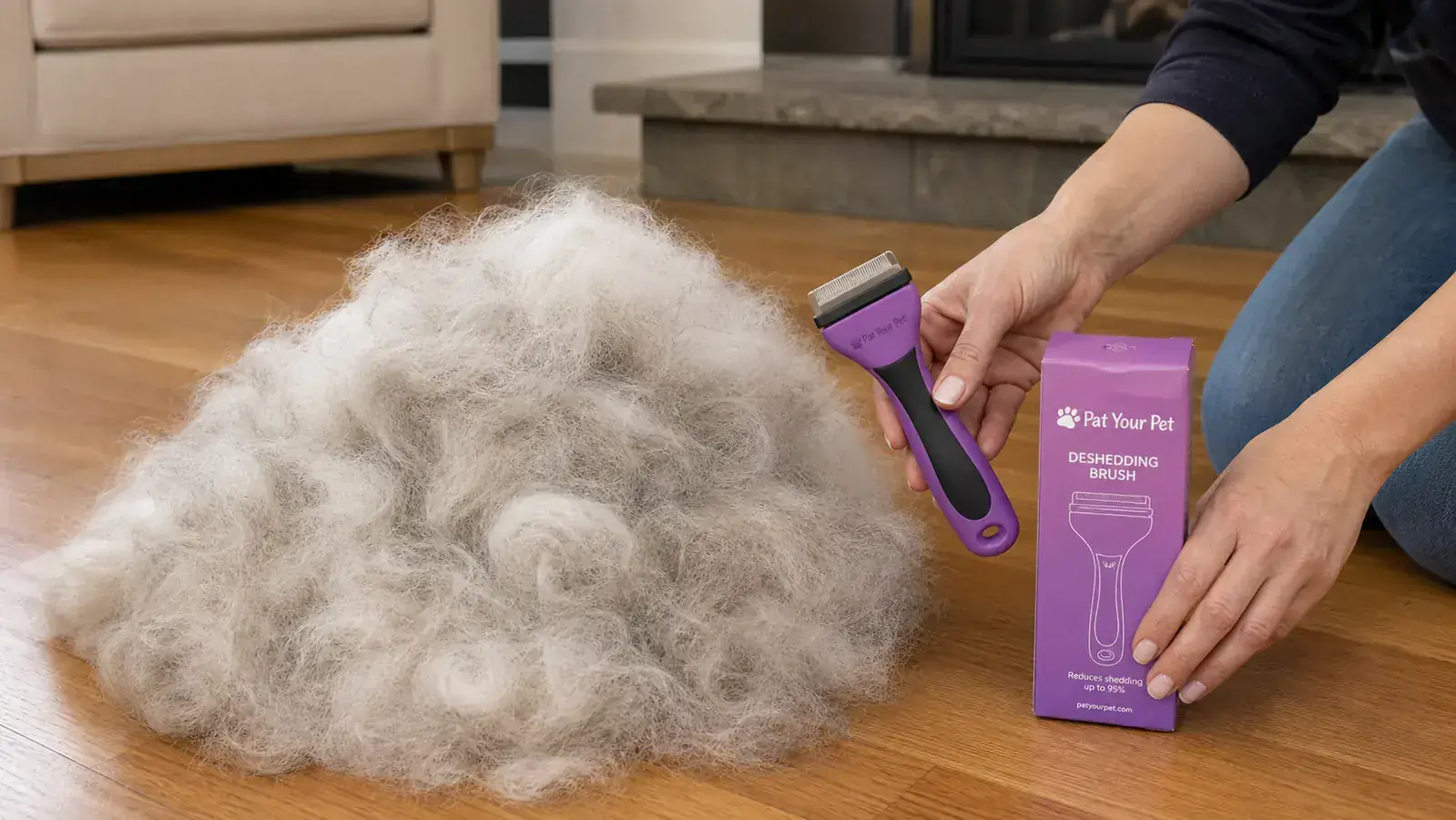
By week eight, I was vacuuming three times a week instead of every day. The brush did not stop the shedding. It just caught it before it landed on everything I own.
How It Did on a Longhaired Cat
Birdie is a five-year-old Maine Coon mix who weighs about 12 pounds. Her owner, my neighbor, was curious whether the brush would work on cats after seeing the results on Koda. I used the bristle side exclusively with Birdie during two grooming sessions because longhaired cats tend to have more sensitive skin than large dogs and I did not want to introduce the pins on a cat I was meeting for the first time.
The bristle side worked fine as a grooming and detangling aid on Birdie's outer coat. It was not a dramatic deshedding experience the way the pin side is on Koda, but it was smooth and did not pull. If you have a cat who is tolerant of brushing, the bristle face would be a reasonable everyday tool. For serious undercoat work on a cat I would still recommend a dedicated cat deshedding comb, but for a household with both a dog and a cat, this brush handles both without needing two separate tools.
Durability After Three Months of Real Use
The pins have not bent. The handle has not cracked. The plastic body has picked up a few light scratches from being set down on the concrete patio, but nothing structural. I run it under warm water after each session and it dries quickly. The pins do collect fur at the base when Koda is blowing coat heavily, and you need to pull the collected fur off by hand every few passes. There is no self-cleaning mechanism here. That is the one convenience gap compared to brushes with an ejector button, though I will take build quality over a gimmick any day.
At three months I would put this in the same durability tier as tools costing two to three times as much. The fact that it has 42,000 Amazon ratings and has been sitting at 4.6 stars for what looks like an extended run suggests I am not the only one finding this to be a longer-lasting brush than the price suggests.
What I Liked
- Pin side pulls real Husky undercoat without bending or poking
- Ergonomic handle holds up through 20-minute sessions without wrist strain
- Works on both dogs and cats, bristle side handles sensitive pets
- Solid build quality at a price that makes the FURminator comparison easy
- Easy to clean, quick to rinse and dry after each session
Where It Falls Short
- No self-cleaning ejector button means manual fur removal every few passes
- Pin side can snag existing tangles instead of working through them on matted coats
- Bristle side is a finishing tool, not a serious deshedder on its own
- Grip shows plastic scratching on concrete or rough surfaces over time
- Not ideal as a standalone cat deshedding tool if serious undercoat removal is needed
The Mat Problem: Where This Brush Falls Short
I want to be clear about the one situation where this brush is not the right tool. If your dog has existing mats or tangles, the pin side will snag and pull rather than work through them. I found this out on one of Koda's first sessions when he had a mat developing behind his left ear. The brush caught it and he yelped. I had to stop, use a detangling spray and my fingers to work the mat out first, and then resume. After that I always do a quick finger-comb behind the ears and in the armpit areas before I start.
This is not unique to this brush. Most pin brushes behave the same way on existing tangles. It is more a reminder that a deshedding brush is a maintenance tool, not a rescue tool. If your dog's coat is already matted, start with a slicker brush or a wide-tooth dematting comb before you reach for this one.
Who This Is For
This brush is a strong fit for owners of medium to large double-coated dogs who are willing to groom on a consistent schedule, two to three times per week. It performs best on Huskies, Malamutes, German Shepherds, Golden Retrievers, Bernese Mountain Dogs, and similar breeds with a real undercoat. If you are brushing regularly and want a tool that will actually capture that loose undercoat before it covers your furniture, the Pat Your Pet brush does exactly that without charging you what the FURminator asks for the same basic function. It is also a reasonable all-household brush if you have a longhaired cat alongside your dog.
Who Should Skip It
If your dog has a single-layer coat, like a Poodle, Greyhound, or Boxer, this brush is more than you need. The pin side is built for double-coated breeds and will be overkill on a smooth or curly single-layer coat. I would also skip this as a primary tool if your dog already has significant matting, or if you are looking for a self-cleaning brush that ejects collected fur with a button press. And if your pet is a short-haired cat, the bristle side is probably all you will ever use, which is fine but feels like leaving half the tool on the table.
Three months in, I would still choose this brush over the FURminator at three times the price.
The Pat Your Pet deshedding brush has held up through twice-weekly sessions on a heavy-shedding Husky with no bent pins, no cracked handle, and a real difference in how much fur ends up on the floor. Check today's price on Amazon and see why it has 42,000 ratings.
Amazon Check Today's Price on Amazon →