

My Border Collie mix, Hazel, used to lose her mind at the first rumble of distant thunder. Not just pacing or whining. Full shaking, panting, clawing at the bathroom door to get behind the toilet, pupils blown wide. The first time it happened I thought something was medically wrong with her. It was just a regular summer storm rolling through the valley at 11 p.m.
Storm phobia is one of the most common anxiety issues in dogs, and it tends to get worse over time if you do not actively address it. The good news is that a combination of environmental management, behavioral conditioning, and the right supplement can take a genuinely terrified dog and bring them to a manageable, much calmer place. I have tested most of what follows on Hazel over the past two years, and the difference today versus where she started is night and day. Here is the approach that worked.
Your dog does not have to white-knuckle every storm. This supplement takes the edge off before the panic sets in.
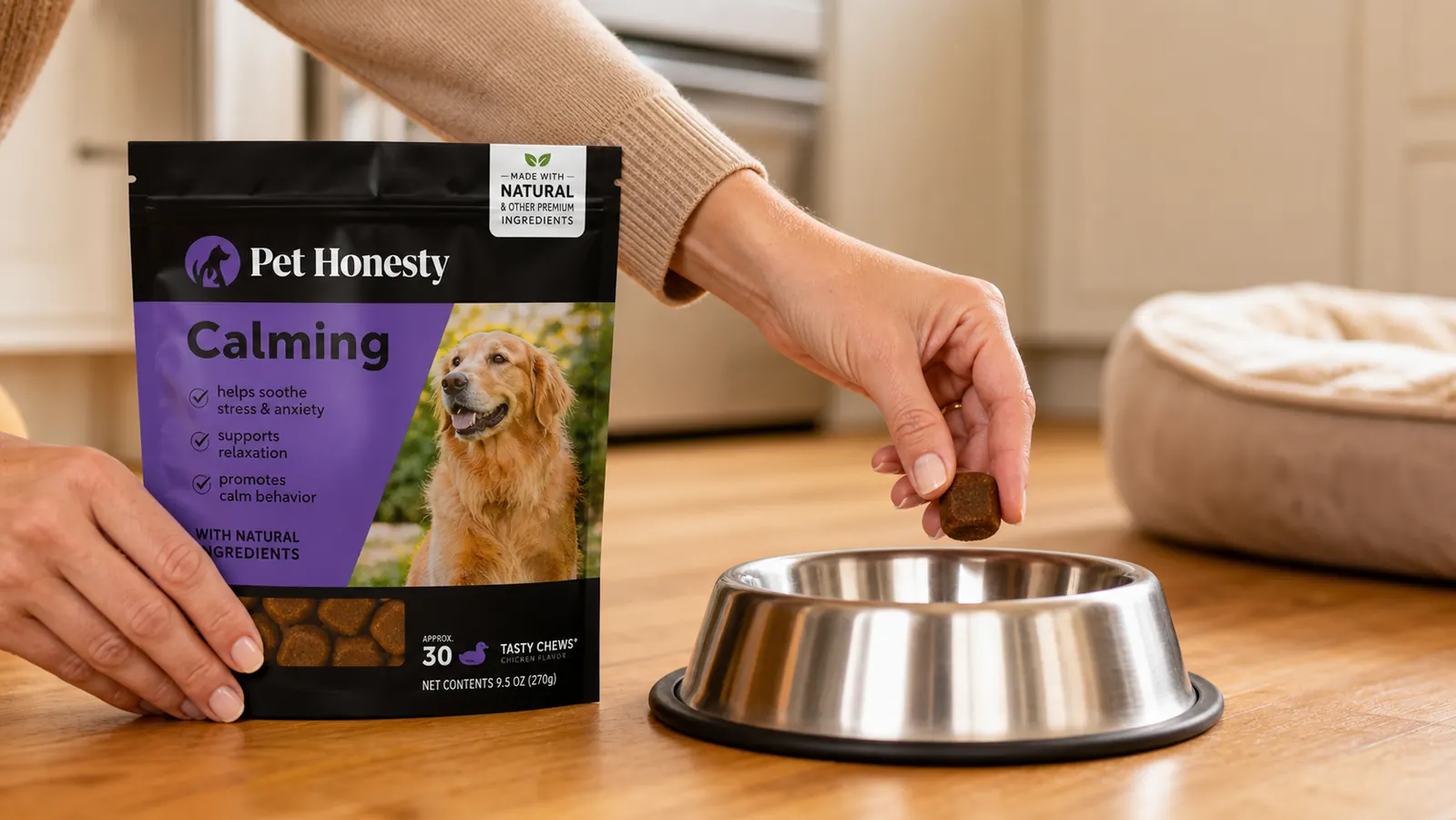
Pet Honesty Hemp Calming Chews combine ashwagandha, L-theanine, and valerian root to reduce stress responses in noise-sensitive dogs. Over 15,000 Amazon reviews. Rated 4.0 stars. Works best when you start it before the storm arrives, not during.
Amazon Check Today's Price on Amazon →Step 1: Set Up a Dedicated Safe Space Before Storm Season Starts
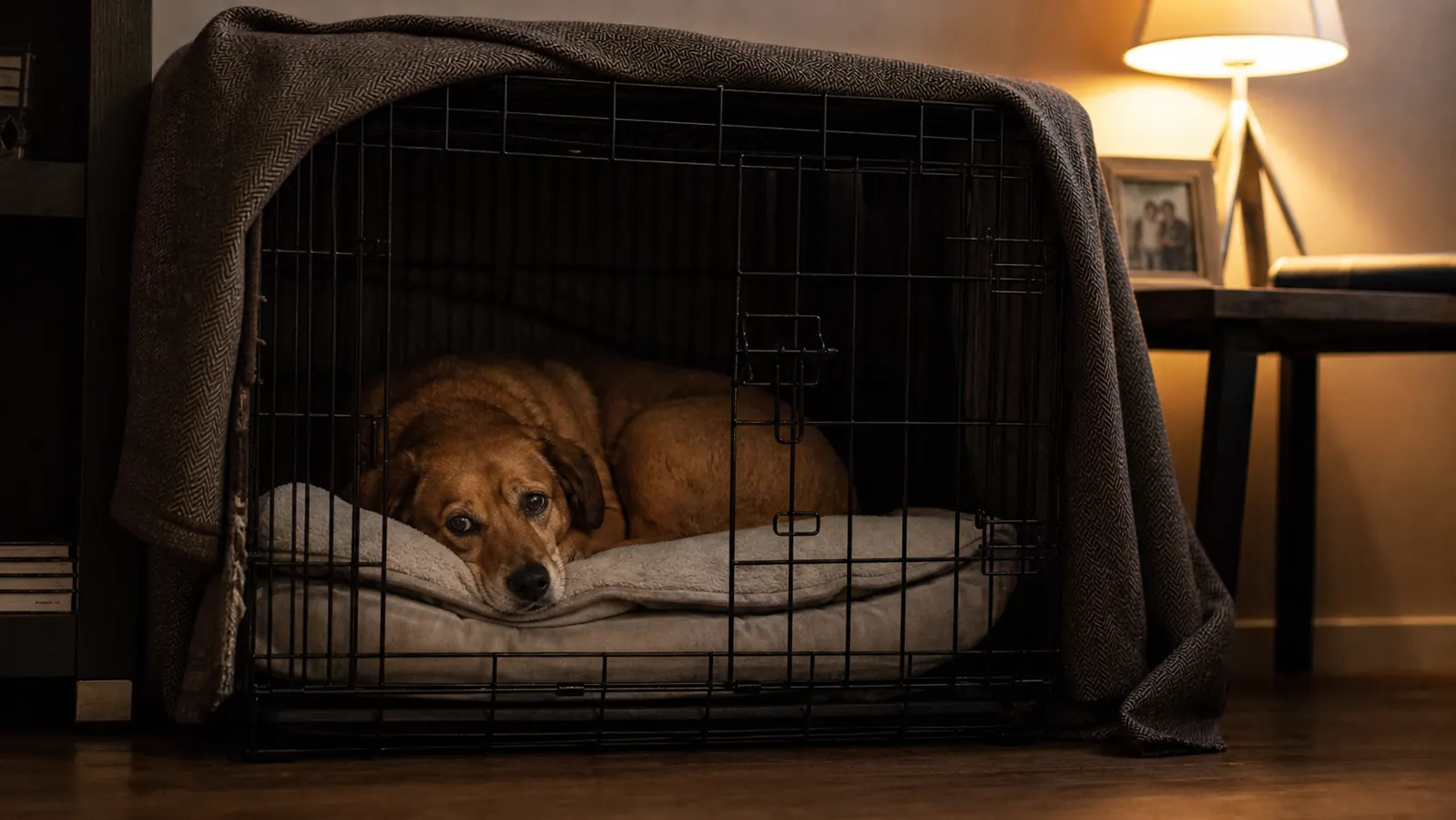
Dogs self-soothe by finding small, enclosed, dark spaces. Behind the toilet, under the bed, inside a closet. That instinct is actually useful. Instead of fighting it, give Hazel a designated spot she associates with calm before she is ever in a panicked state. I used a wire crate covered with a heavy blanket on three sides, placed in an interior room with no windows. A white noise machine nearby helps mask the low-frequency rumble that travels through walls.
The key is building that association during calm weather, not mid-storm. I fed Hazel her meals in the crate for two weeks straight during a stretch of clear weather in April. By the time the first storm rolled through in May, she walked in there herself within ten minutes of the barometric pressure dropping. That is not luck. That is conditioning done ahead of time.
If your dog does not have a crate or finds it stressful, a closet with the door cracked, or even a corner behind a large piece of furniture, can serve the same function. What matters is consistency. Always the same spot. Always the same cues around it, like the blanket, the white noise, the dim light. You are building a reliable signal that says 'here is where it is safe.'
Step 2: Give a Calming Supplement 30 to 60 Minutes Before the Storm Hits
This is where Pet Honesty Hemp Calming Chews come into the routine. The active ingredients, specifically ashwagandha, L-theanine, and valerian root, work on the nervous system to reduce the physiological stress response. They are not sedatives. Hazel does not get groggy or glassy-eyed. She just does not ramp up as fast or as hard. The panting starts later. The shaking is less intense. She is still aware of the storm, but it does not hijack her completely.
The catch is timing. These chews need about 30 to 45 minutes to take effect, which means you need some lead time. I keep the weather app on my phone and give Hazel two chews (she is 48 lbs, so the label suggests two for her weight) whenever I see a storm warning pop up. If I catch it an hour out, even better. If you live somewhere with pop-up afternoon thunderstorms, consider giving a chew as part of the morning routine during high-risk months. The ingredients are gentle enough for daily use.
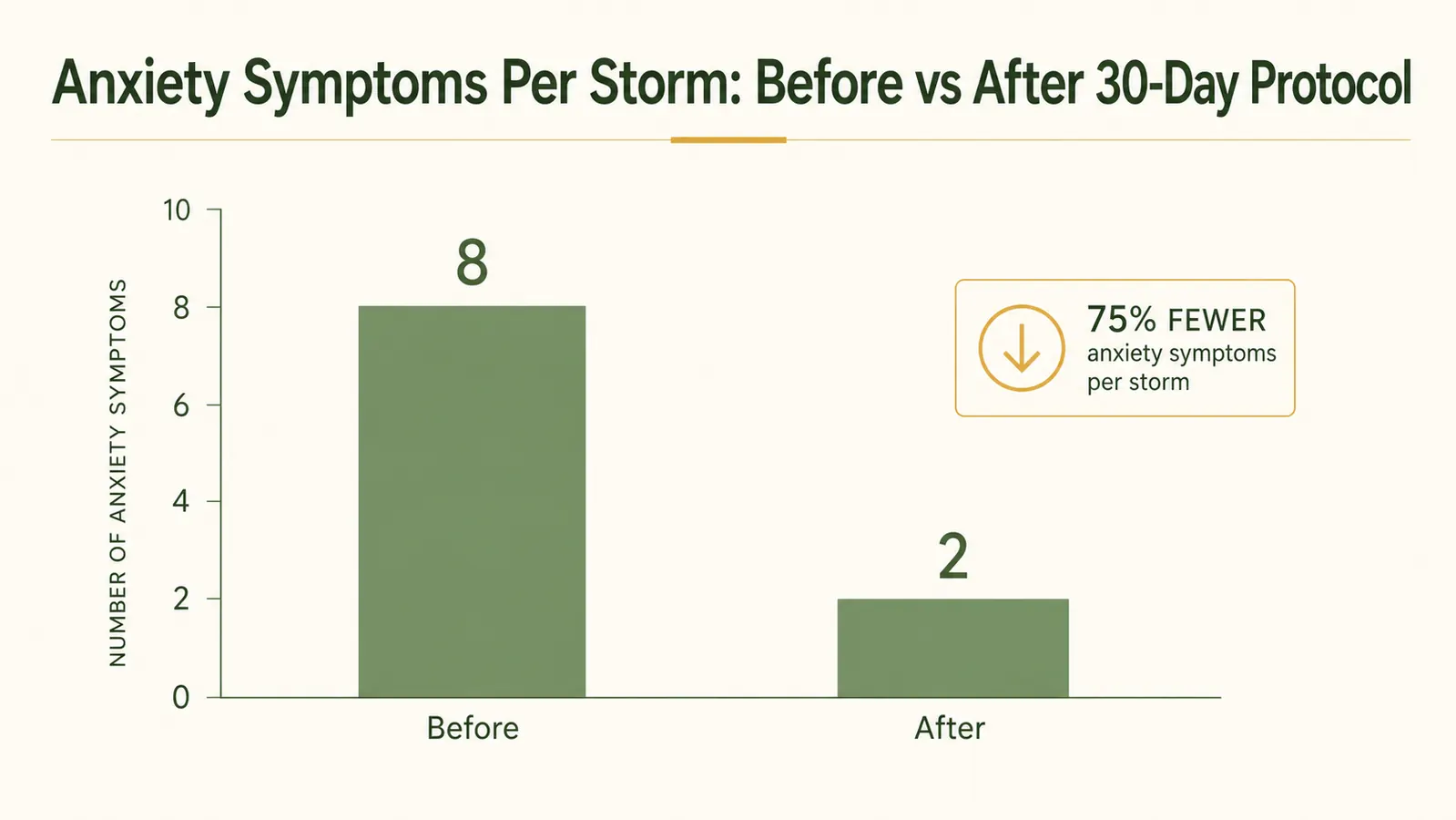
I will be honest that the 4.0-star rating on Amazon gave me a pause before I bought them. After trying them I think the reviews split along two camps: dogs with mild anxiety who see a noticeable difference, and dogs with severe phobia who do not get full relief from a supplement alone. Hazel is in that second camp. The chews alone were not enough when she was at her worst. But as part of the broader protocol here, they made a real and measurable difference.
Step 3: Try a Compression Wrap During Active Storms
Anxiety wraps, like the ThunderShirt brand or the generic compression shirts on Amazon, apply gentle constant pressure to a dog's torso. The theory is similar to swaddling an infant: firm, even pressure activates the parasympathetic nervous system and produces a mild calming effect. The research on this is mixed, but my personal experience is that Hazel settles faster with one on than without.
Again, you have to introduce it during calm periods, not the first time your dog is already spiraling. Let them sniff it. Put it on for five minutes while you give a treat, take it off. Gradually increase the time. By the time a storm rolls in, the wrap itself becomes a familiar, neutral sensation rather than one more stressor piled on top of the panic.
Sizing matters a lot. If it is too loose it does nothing. Follow the manufacturer's fit guide carefully. You should be able to slide two fingers under the fabric but it should not be sliding around on their body. I went through two sizes before landing on the right fit for Hazel, so do not give up if the first one feels off.
The biggest mistake I see is people trying everything for the first time during an active storm. All of this works better when it is familiar. Build the routine in calm weather and the tools are already in place when you need them.

Step 4: Stay Calm and Matter-of-Fact, Your Energy Is Contagious
This one is harder than it sounds because it runs against every instinct you have when your dog is shaking and terrified. Every time you rush over with 'oh poor baby, it is okay, shhh' in a high-pitched anxious tone, you are confirming for your dog that the storm is, in fact, something worth panicking about. Dogs read your emotional state with remarkable precision. If you are calm and unbothered, that information matters to them.
The goal is not to ignore your dog. You can absolutely sit near them, pet them with slow steady strokes, speak in a low unhurried voice. The goal is to model the emotional state you want them to arrive at, not to match the state they are already in. Think of it like being the calm person in the room when everyone else is freaking out. Your dog is looking to you for information about how scared to be.
If you have multiple dogs, keep them together if they tend to settle each other, but separated if the anxious one stresses out the calmer one. Hazel and my older terrier mix do better in the same room. Other pairs I know of do better apart. Watch your specific dogs and follow what the behavior tells you.
Step 5: Use Sound Masking and Light Management to Reduce Triggers
Storms are multi-sensory events for dogs. There is the sound obviously, but also the low-frequency vibration through the floor, the flicker of lightning, the drop in barometric pressure, and the static electricity buildup that some dogs are particularly sensitive to. You cannot eliminate all of those, but you can reduce the sound and light exposure significantly.
White noise machines or brown noise played through a speaker in the safe space room help mask the sharp crack of thunder. I use a fan on high pointed at the wall. It is not perfect but it takes the edge off the most startling sounds. Closing curtains in rooms Hazel might run through reduces the lightning flash exposure. Some dogs are so sensitive to static that grounding mats designed for humans help, though I have not personally used one.
Music also works for some dogs. There is a documented body of research showing that classical music, and certain frequencies of reggae and soft rock, reduce cortisol in dogs more than silence does. I have had good results with low-tempo instrumental music played at low volume during storms. It is a free thing to try. If it does not help after a few storms you have lost nothing.
Step 6: Build Long-Term Resilience Through Desensitization
Everything above is management. This step is the only one that changes the underlying fear response over time. Desensitization involves playing storm sounds at very low volume while your dog eats or plays, and gradually increasing the volume over weeks and months until they stop reacting. It is slow. It takes real patience. And it works.
You can find storm sound tracks on YouTube or Spotify. Start at a volume so low it barely registers. If your dog shows no reaction, that is the right volume to start at. Pair it with something they love, a meal, a Kong loaded with peanut butter, a training session with high-value treats. The goal is to build a new association between the storm sounds and something good, rather than the existing association between storm sounds and imminent doom.
Progress is not linear. Hazel went two months with no visible reaction to the recordings and then had a hard night during a real storm. That is normal. Real storms add barometric pressure changes, static, and the full sensory package that a recording cannot replicate. Keep at it anyway. Over an entire season the trend line is clearly toward less reaction, even if individual storms still vary.
What Else Helps
A few things worth knowing that do not fit neatly into a numbered step. First, if your dog's storm phobia is severe and none of this is touching it, talk to your vet about situational anxiety medication. Trazodone and gabapentin are both commonly prescribed for exactly this scenario, given only on storm days. There is no shame in using prescription support while you work on the behavioral side. Second, melatonin has decent anecdotal evidence behind it for noise phobia specifically and is very low risk. The dose is weight-dependent so ask your vet before adding it. Third, storm phobia tends to get worse with age, not better, so addressing it now rather than hoping your dog grows out of it is the better call.
The internal links at the bottom of this page point to a full review of the Pet Honesty chews after 30 days and a rundown of the signs your dog needs calming support beyond just storms. Both are worth reading if you are trying to figure out the full picture of what your dog is dealing with.
If you take one thing from this guide, build the routine before storm season. These chews are the easiest part to start today.
Pet Honesty Hemp Calming Chews are available on Amazon with fast shipping. They work best as part of a broader calming protocol, but many owners see a meaningful difference within the first few uses. Ashwagandha, L-theanine, and valerian root. No sedative effect. Soft chews most dogs take willingly.
Amazon Check Today's Price on Amazon →