
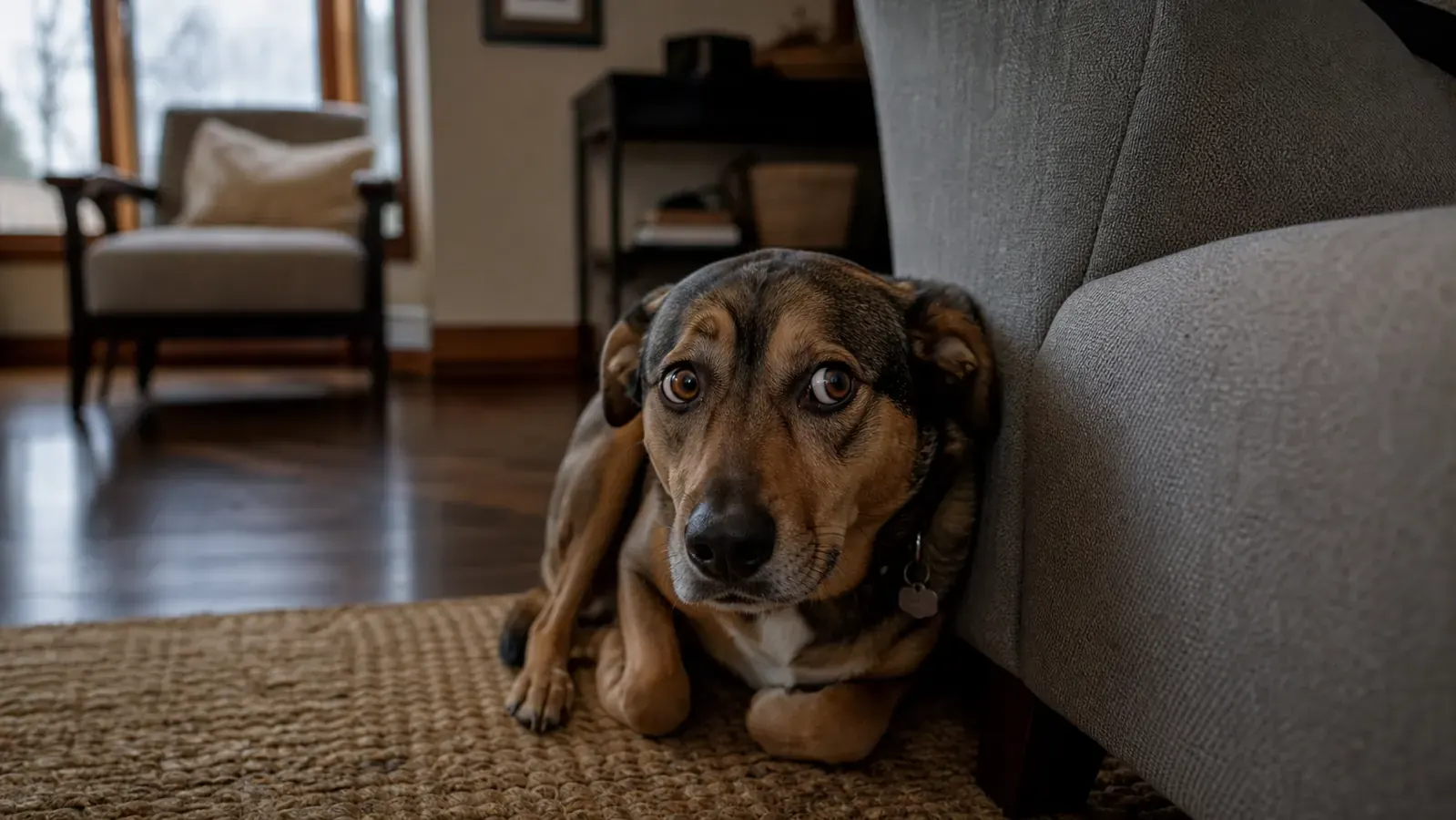
My Border Collie, Hazel, used to lose her mind every time I put on my shoes. Not in the cute, excited-to-walk way. In the pacing-whining-destroying-a-pillow way. For two years I called it her 'personality.' A trainer friend of mine finally said it plainly: that's separation anxiety, and she's struggling. Once I started paying attention, I noticed a lot more than the shoe thing. Hazel had been showing me signs for months. I just didn't know what I was looking at.
If any of these 10 signs sound familiar, your dog may be dealing with anxiety that goes beyond normal excitement or moodiness. A daily calming supplement is not a cure-all, but for a lot of dogs, it takes the edge off enough to actually help. I'll share the one I've had the best luck with at each step.
If your dog checks two or more of these boxes, this is where I'd start.
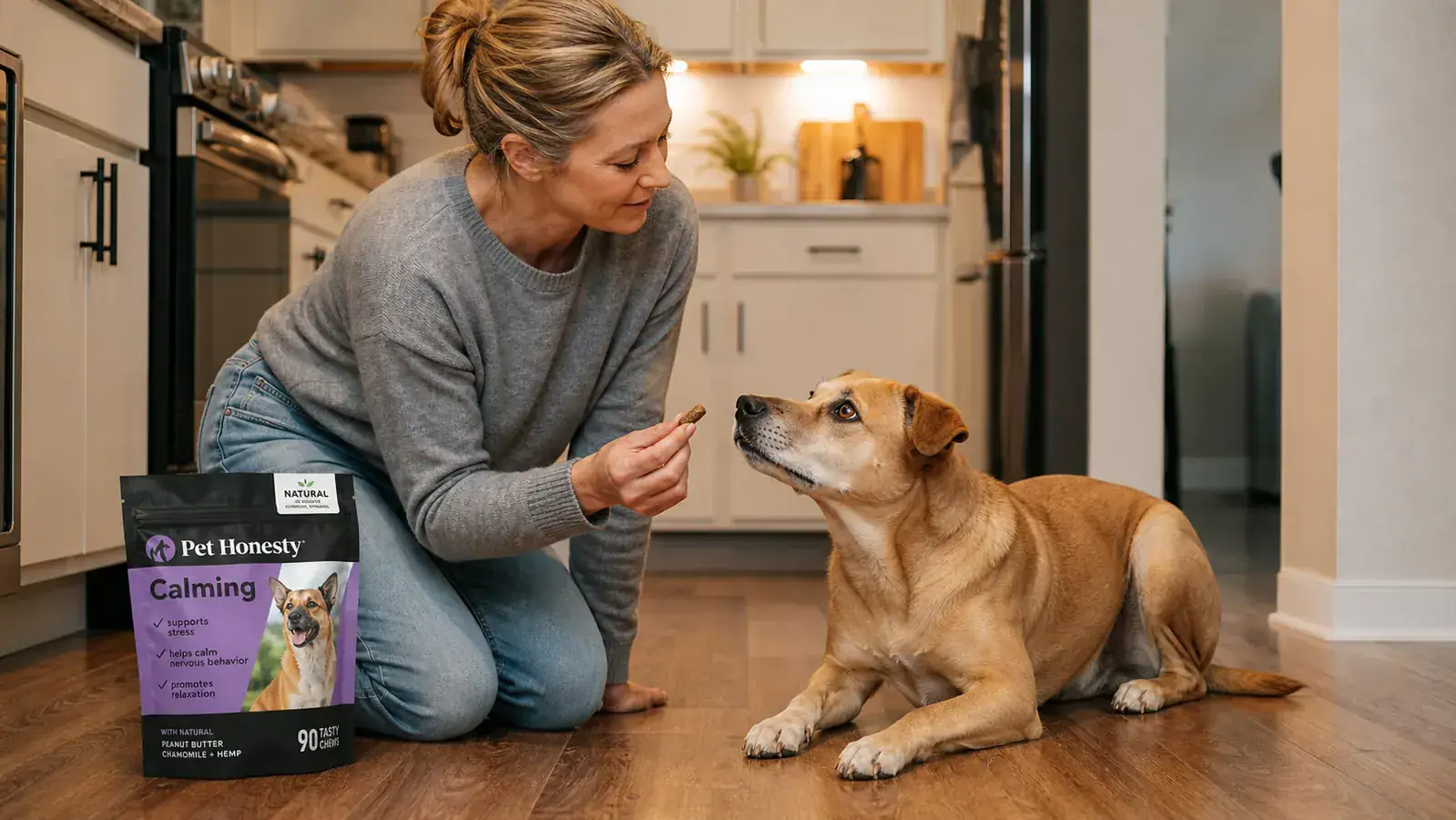
Pet Honesty Hemp Calming Chews use ashwagandha, L-theanine, and valerian root to support dogs with everyday stress and occasional anxiousness. Over 15,000 reviews and a 4-star average. Not a sedative, just a noticeable edge-off.
Amazon Check Today's Price on Amazon →Excessive Panting When Nothing Physical Is Going On
Panting after a run makes sense. Panting while lying on the couch on a cool day does not. Anxious dogs pant as a physical release of stress, and it often goes unnoticed because panting seems normal. If your dog pants constantly without a clear physical reason, anxiety is one of the first things to rule in. Hazel did this every evening around 5 p.m., which turned out to be tied to anticipation of my husband leaving for his night shift.
Pacing or Inability to Settle
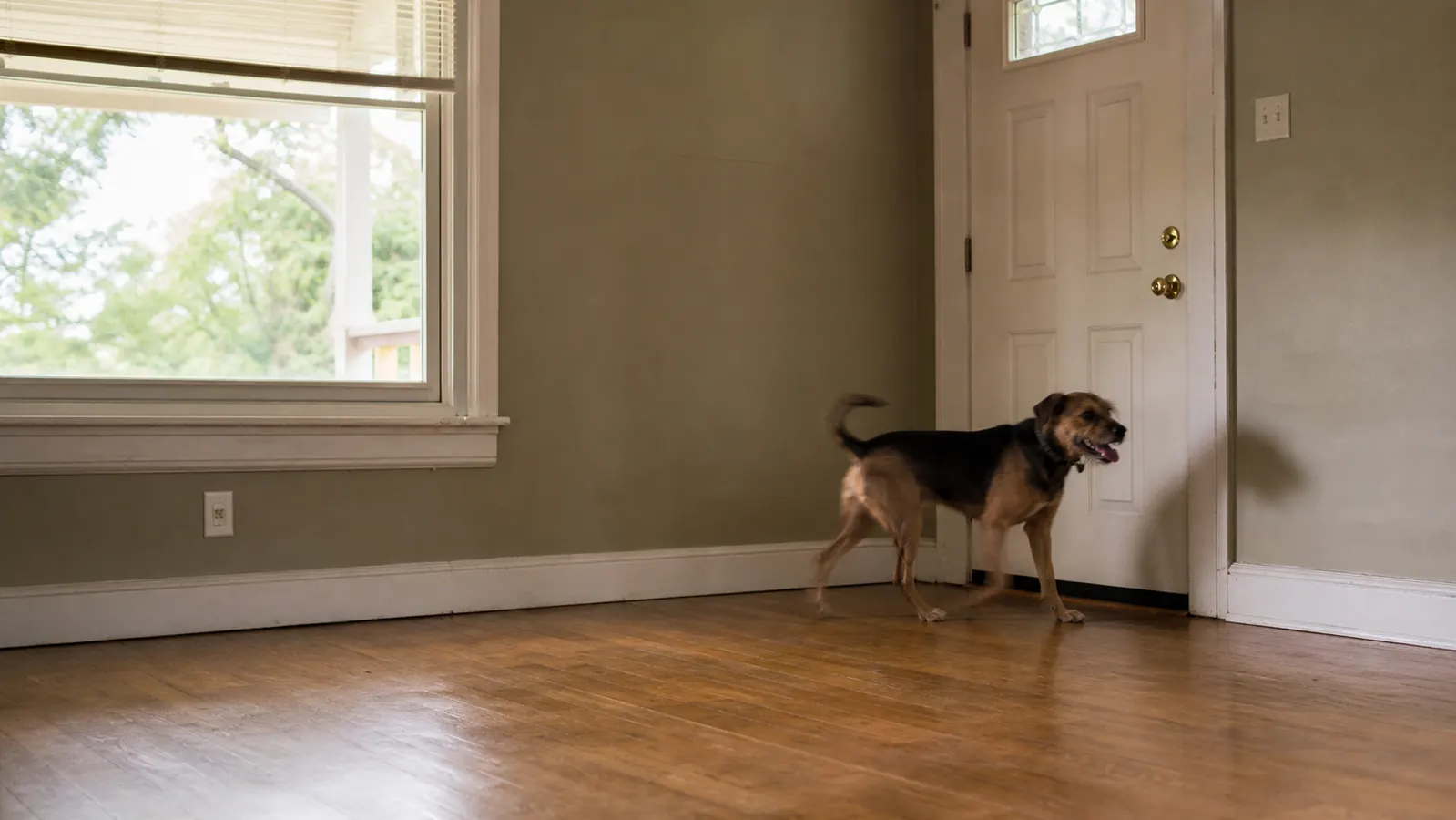
An anxious dog cannot rest. They'll circle the room, move from spot to spot, and seem physically unable to lie down and relax even when the house is calm and quiet. This is one of the clearest behavioral signs of chronic stress. If your dog looks like they've had too much coffee even when nothing is happening, their nervous system is running hot and may need some support.
Destructive Chewing When Left Alone
Separation anxiety is probably the most common form of canine anxiety, and chewing is one of its loudest symptoms. Dogs who chew furniture, baseboards, or personal items specifically when left alone are not being spiteful. They're panicking. Chewing releases calming endorphins and gives the dog something to do with the stress response that's running through their body. It's a coping mechanism, not a behavior problem in the traditional sense.
Trembling or Shaking Without a Temperature Cause
Some dogs tremble when they're cold or sick, but anxious dogs also shake as a physical response to fear or stress. If your dog shivers through thunderstorms, fireworks, car rides, or vet visits and it's clearly not temperature-related, that's anxiety expressing itself physically. Small breeds are often dismissed as 'just shaky dogs,' but consistent situational trembling is worth addressing rather than accepting.
Hiding or Escaping the Room
When something triggers your dog and their first instinct is to disappear under the bed, into a closet, or behind the toilet, that's a fear response. It means the trigger feels threatening enough that they need to remove themselves. A lot of owners interpret this as shyness. Sometimes it is. But if it's consistent and tied to specific events like loud noises, strangers, or other dogs, it's anxiety-driven avoidance worth addressing.
Hazel had been showing me signs for months. I just didn't know what I was looking at. Once I did, everything about her behavior made a lot more sense.
Excessive Barking or Whining
Barking is normal. Constant barking triggered by sounds outside, people walking by, or simply being left alone is a different thing. Anxious dogs vocalize because they're distressed, and the barking can spiral into a loop they can't stop on their own. If your neighbors have mentioned it or you've heard it on a camera while you're out, that's useful data. It usually means your dog's stress response is firing when you're not there to help them reset.
Aggression That Seems to Come Out of Nowhere
A lot of what looks like aggression in dogs is actually fear. A dog that snaps at strangers, growls around other dogs, or gets reactive on the leash may be operating from a place of anxiety rather than dominance or bad temperament. The aggression is defensive. 'Nothing provoked it' usually means the provocation was something the dog perceived that you didn't catch. Fear-based reactivity responds better to anxiety support than it does to punishment-based training.

Refusing to Eat When You're Not Home
Some dogs won't touch their food unless their person is in the room. This is a separation anxiety tell that's easy to miss because the dog eats fine when you're around and you don't see the full picture. If your dog consistently leaves food untouched for hours after you leave and then eats the second you walk back in, their anxiety is disrupting a basic biological function. That's a meaningful sign.
Hypervigilance or Startle Responses
Some dogs are always on. Every sound from outside sends them scrambling to the window. Every visitor puts them on high alert. They can't truly relax because their nervous system is scanning for threats constantly. This shows up as dogs who seem 'intense' or 'high-strung' by nature. Sometimes that's breed wiring. But sometimes it's chronic low-grade anxiety that's become their baseline. A calming supplement won't turn a working breed into a couch dog, but it can bring the volume down a notch.
GI Issues Without a Clear Medical Cause
The gut and the brain are connected, and anxiety can show up as diarrhea, vomiting, or loose stool that has no dietary explanation. If your vet has ruled out food sensitivities and parasites but your dog still has inconsistent digestion around stressful events, trips, or routine changes, anxiety may be the root. This one surprises a lot of people, but it's well-documented in dogs and not that different from how stress affects our own digestion.
What I'd Skip
Prescription sedatives are not where I'd start unless a vet has strongly recommended them after ruling out everything else. They tend to blunt the whole dog, not just the anxious edge. Thundershirts are worth trying for situational noise anxiety specifically, but they do nothing for dogs whose anxiety is social or separation-based. Herbal sprays and diffusers are hit or miss, and in my experience they mostly help owners feel like they're doing something. A consistent daily chew with actual clinical ingredients is a better first step than a spray you have to remember to activate.
If you want to dig deeper into what actually works for noise-triggered dogs, I wrote a full guide on calming methods for storms and fireworks that goes beyond just supplements. And if you want to see how Pet Honesty Calming Chews performed over 30 days on a noise-phobic dog, that review is worth reading before you buy.
A consistent daily chew with actual clinical ingredients is a better first step than a spray you have to remember to activate.
If your dog checks off three or more of these signs, I'd try a month of Pet Honesty and see what changes.
The ashwagandha and L-theanine combination takes a couple of weeks to build up. Most owners notice a shift in weeks two or three, not day one. Worth giving it a full month before deciding. Current price and shipping options are on the Amazon listing.
Amazon Check Today's Price on Amazon →